On this page
- Water leaking through the ceiling: the first ten minutes
- Water coming through a light fitting
- Bulging ceiling water: what to do
- Where is the water coming from?
- Emergency ceiling leak: when to call who
- After the leak: drying out, insurance and repairs
- Need an emergency plumber now?
- Frequently asked questions
Key takeaways
- Water and electricity is the biggest immediate danger. Never touch a switch, fitting or socket that is wet or near running water.
- Turn off the main stopcock, then switch off the boiler and immersion heater. If the leak continues, it may be fed from a loft tank or the heating system.
- A bulging ceiling holds a lot of water. Keep people out from underneath it and get professional help.
- Photograph the damage before you clear up, then check your home insurance for escape of water and trace and access cover.
- Pipes inside your property boundary are your responsibility, so call a plumber rather than the water company for a leak inside the house.
If water is leaking through the ceiling, deal with electricity first: keep away from light fittings and switches near the water, and switch off the power at the consumer unit if you can reach it without touching anything wet. Then turn off the water at the stopcock, switch off the boiler and any immersion heater, and catch the water while you find the source. A leak that is coming through a light fitting or making the ceiling bulge is an emergency and needs a plumber, and possibly an electrician, straight away.
Most ceiling leaks come from the room directly above or from pipework running in the floor void between. Here is a clear order of actions for the first ten minutes, then how to find the cause and what to do afterwards.
Water leaking through the ceiling: the first ten minutes
- Keep everyone away from the wet area, especially children and pets, and anyone standing under a sagging section of ceiling.
- Make the electrics safe. Do not use light switches in the affected room. If you can reach your consumer unit (fuse box) without touching anything wet and you are standing on a dry floor, switch off the main switch or the circuit for that area. If the consumer unit itself is wet, leave it alone, leave the area and call an electrician.
- Turn off the water at the stopcock. It is usually under the kitchen sink, but can be in a utility room, downstairs toilet, garage or under the stairs, near where the supply enters the home. Our guide to finding and testing your stopcock shows where to look.
- Switch off the boiler and immersion heater. This stops them heating with no water flowing and stops a heating leak being topped up.
- Open the cold taps in the kitchen and bathrooms and flush toilets to drain water out of the pipes, reducing what can escape.
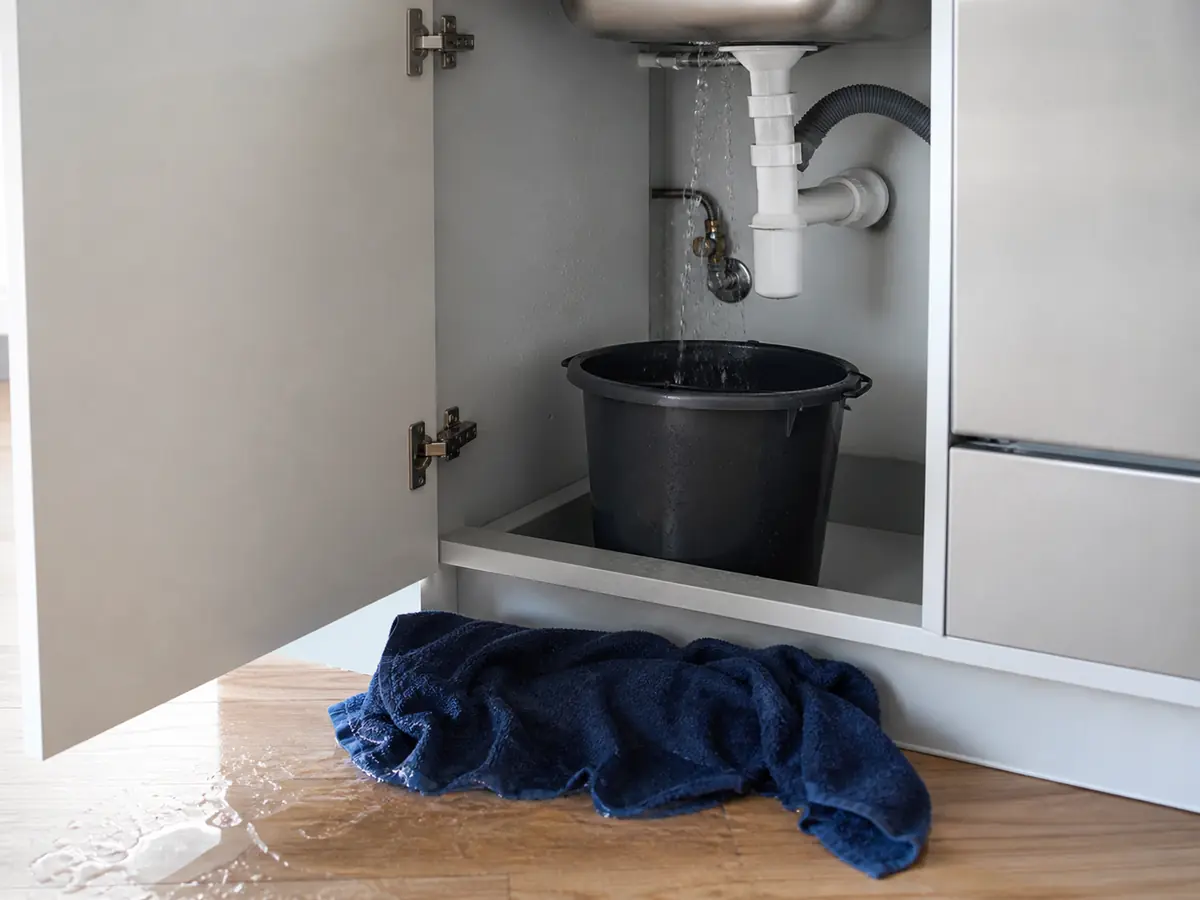
- Catch the water with buckets and towels, and move furniture, rugs and electrical items out of the way.
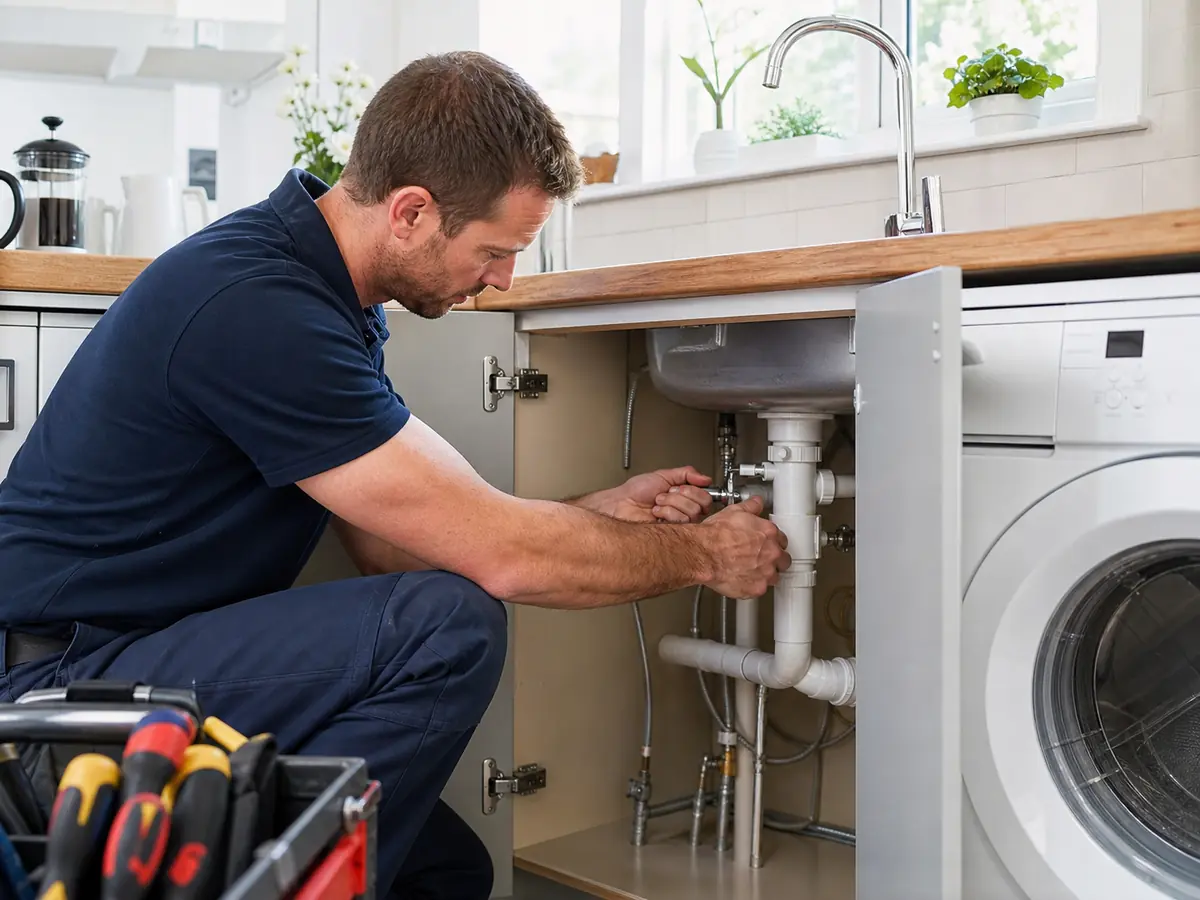
- Call a plumber. For an active leak, use an emergency plumber.
The South Staffs Water winter factsheet recommends exactly this approach for a burst: shut the internal stop tap, open the cold taps and flush toilets to drain the system, and switch off central heating and water heating appliances. It also advises keeping hot taps closed if the hot water system might be frozen.
Water coming through a light fitting
Water coming through a light fitting is the most dangerous version of a ceiling leak. The water has found the cable route, which means it is in contact with live wiring unless the circuit is off.
- Do not touch the fitting or switch, and do not try to remove the bulb.
- Turn off the lighting circuit or the main switch at the consumer unit only if you can do so safely and dry.
- Do not turn that circuit back on until an electrician has checked it, even after the leak has stopped and things look dry.
If you are unsure, assume it is live and stay clear.
Bulging ceiling water: what to do
A ceiling that is sagging or bulging is holding a pool of water on top of the plasterboard. Plasterboard loses strength when soaked and can give way suddenly, bringing a lot of water and debris down at once.
- Keep everyone out from underneath it.
- Make sure the water supply is off so the bulge stops growing.
- Place a large bucket or container underneath and cover the floor.
- Get a plumber or builder to deal with it. Professionals sometimes make a small controlled hole at the lowest point to drain the water into a bucket, but this should only be done well away from light fittings and cables, with the electrics off, and by someone who knows what is above.
Do not climb a ladder under a bulging ceiling.
Where is the water coming from?
Once the supply is off and the area is safe, think about what is above the leak. This helps the plumber and tells you whether the stopcock alone will stop it.
| Source | Clues | Will the stopcock stop it? |
|---|---|---|
| Burst or split supply pipe | Steady or heavy flow, often after a freeze and thaw | Yes, if it is mains-fed |
| Leaking bath, shower tray or seal | Leak appears when someone showers or bathes; stains below the bathroom | Stop using the bath or shower |
| Toilet or waste pipe | Leak after flushing or draining a basin | Stop using the fitting |
| Loft cold water tank or overflow | Leak in a top-floor ceiling; tank overflowing or split | Not always: the tank holds water. Turn off the gate valve on the tank outlet if fitted |
| Hot water cylinder or its pipework | Leak below an airing cupboard | Partly: the cylinder still holds water |
| Central heating pipe or radiator | Boiler pressure dropping; slightly discoloured water | No: the heating is a separate sealed circuit |
| Roof or gutter | Leak during rain; top-floor ceiling or near chimney | No: needs a roofer |
When the leak is from the heating system
If your combi or system boiler’s pressure gauge is dropping and the water is discoloured or dark, the leak may be on the central heating circuit. Switching off the boiler stops it running dry. Do not repressurise it until the leak is found and fixed, or you will simply feed more water through the ceiling. If water is also dripping from the boiler itself, see our guide to water leaking from a boiler. Only a Gas Safe registered engineer should open the boiler casing.
Tank-fed systems in older houses
Many older homes in Stoke-on-Trent and the surrounding towns still have a cold water storage tank in the loft feeding the bathroom and hot water cylinder. The main stopcock stops the tank refilling, but the water already in it can keep flowing. Turning off the outlet valve on the tank, or opening the bathroom cold taps to drain the tank faster, reduces how much escapes. Our loft cold water tank guide explains how these systems work.
Emergency ceiling leak: when to call who
- Emergency plumber: for any active leak from pipes, tanks, cylinders, fittings or the heating system.
- Electrician: if water has reached light fittings, sockets, switches or the consumer unit, or a circuit keeps tripping.
- Roofer: if the leak only happens in rain.
- Your water company: only for problems on their side of the property boundary. Severn Trent says anything inside your property boundary is the homeowner’s responsibility.
- Your insurer: once the leak is under control.
If you smell gas at any point, for example because water has affected a gas appliance, leave the property and call the National Gas Emergency Service on 0800 111 999.
After the leak: drying out, insurance and repairs
Once the plumber has fixed the source:
- Photograph everything, including the ceiling, stains, damaged belongings and the repaired pipe, before you throw anything away.
- Contact your insurer early. Many buildings policies include escape of water cover and some include trace and access cover for finding hidden leaks, but policies vary.
- Let it dry properly. Ceilings and joists can take weeks to dry. Ventilate the room and use dehumidifiers where possible. Repainting too soon can trap moisture and lead to mould.
- Get the electrics checked before using any circuit that was affected.
- Watch for signs of further leaks, such as new stains, a musty smell or rising water bills. Our guide to signs of a hidden water leak explains what to look for.
If the leak came from a frozen pipe, read our burst pipe guide to stop it happening again.
Need an emergency plumber now?
If water is coming through your ceiling in Stoke-on-Trent, Newcastle-under-Lyme or the surrounding area, turn off the water and electrics as above, then call our emergency plumber in Stoke-on-Trent. Our engineers can trace the leak, repair pipework and fittings, and check your boiler and heating system if they were involved. For non-urgent follow-up work, contact Gasmaster to book a visit.
[googlesitekit-end-of-content]
Frequently asked questions
Is water leaking through the ceiling an emergency?
Yes, if it is a steady drip or flow, coming through a light fitting, or making the ceiling bulge. Each of these can cause electrical danger or a ceiling collapse. A small stain that is not growing is less urgent but still needs investigating soon, because a slow hidden leak can rot timbers and cause mould over time.
Should I poke a hole in a bulging ceiling?
It is safer to leave this to a professional. A controlled hole at the lowest point can drain water into a bucket, but only if the electrics are off and there are no cables or fittings nearby. Soaked plasterboard can collapse suddenly, so never stand directly under the bulge.
Why is water still coming through the ceiling after I turned off the stopcock?
The leak is probably fed by stored water, such as a loft tank or hot water cylinder, or by the central heating system, which is a separate circuit. Open the cold taps upstairs to drain the tank, switch off the boiler, and tell your plumber the leak continued after the stopcock was closed.
Can I turn the lights back on once the leak stops?
Not until the affected circuit has been checked. Water can sit inside light fittings, junction boxes and cable runs for some time after the leak stops. An electrician can test the circuit and confirm when it is safe to switch back on.
Does home insurance cover water coming through the ceiling?
Many buildings and contents policies cover damage caused by water escaping from pipes, tanks and appliances, often called escape of water. Cover for the repair to the pipe itself, and for finding a hidden leak, varies by policy. Check your wording and excess, photograph the damage and contact your insurer before arranging major repairs.
Related services

Abdul runs Gasmaster Plumbing & Heating and has worked on boilers, heating and gas appliances across Stoke-on-Trent since 2005. He is Gas Safe registered (reg. 220932), and these articles come from his day to day work in homes and businesses across Staffordshire, Cheshire and Derbyshire.