On this page
- Where is my stopcock usually located?
- How do I find a stopcock that is not under the sink?
- How do I test my stopcock?
- What if the stopcock is stuck or will not turn?
- Where is the outside stop tap and who is responsible for it?
- What else should I do while I am there?
- Getting help with a stopcock or leak in Stoke-on-Trent
- Frequently asked questions
Quick answer
In most UK homes the stopcock (internal stop tap) is under the kitchen sink, close to where the water main enters the house. If it is not there, check under the stairs, in a downstairs toilet, utility room, garage or cellar. Turn it clockwise to shut off the water, and test it once a year so it does not seize.
Key takeaways
- Most stopcocks are under the kitchen sink, near where the main enters.
- Clockwise closes the valve; test it once a year so it keeps moving.
- Never force a seized stopcock; a broken spindle can flood the kitchen.
- Label it and show everyone in the house where it is.
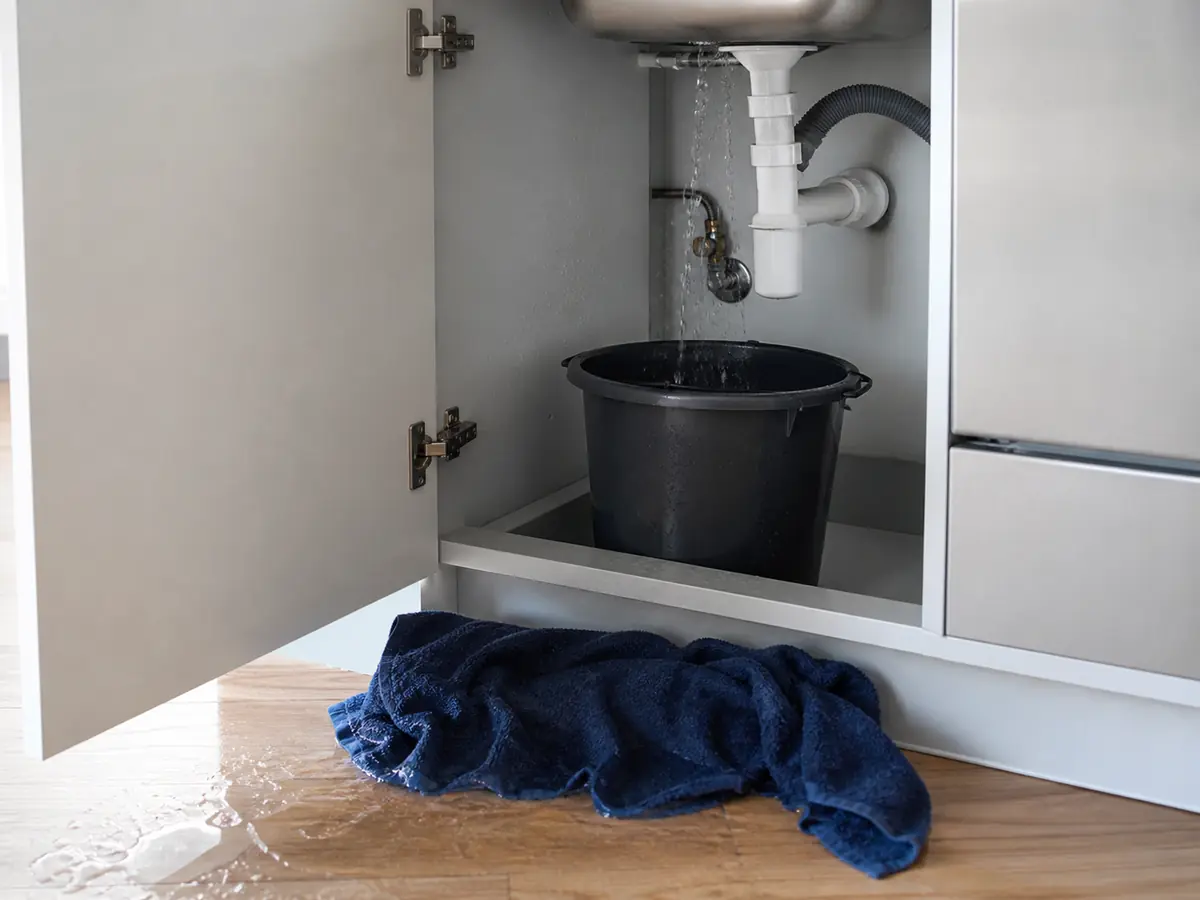
A burst pipe is one of those jobs where every minute counts. The water will not stop until someone turns it off, and a surprising number of people only start hunting for the stopcock once the ceiling is already dripping. Finding and testing yours on a dry summer afternoon takes ten minutes and saves a lot of damage later.
Where is my stopcock usually located?
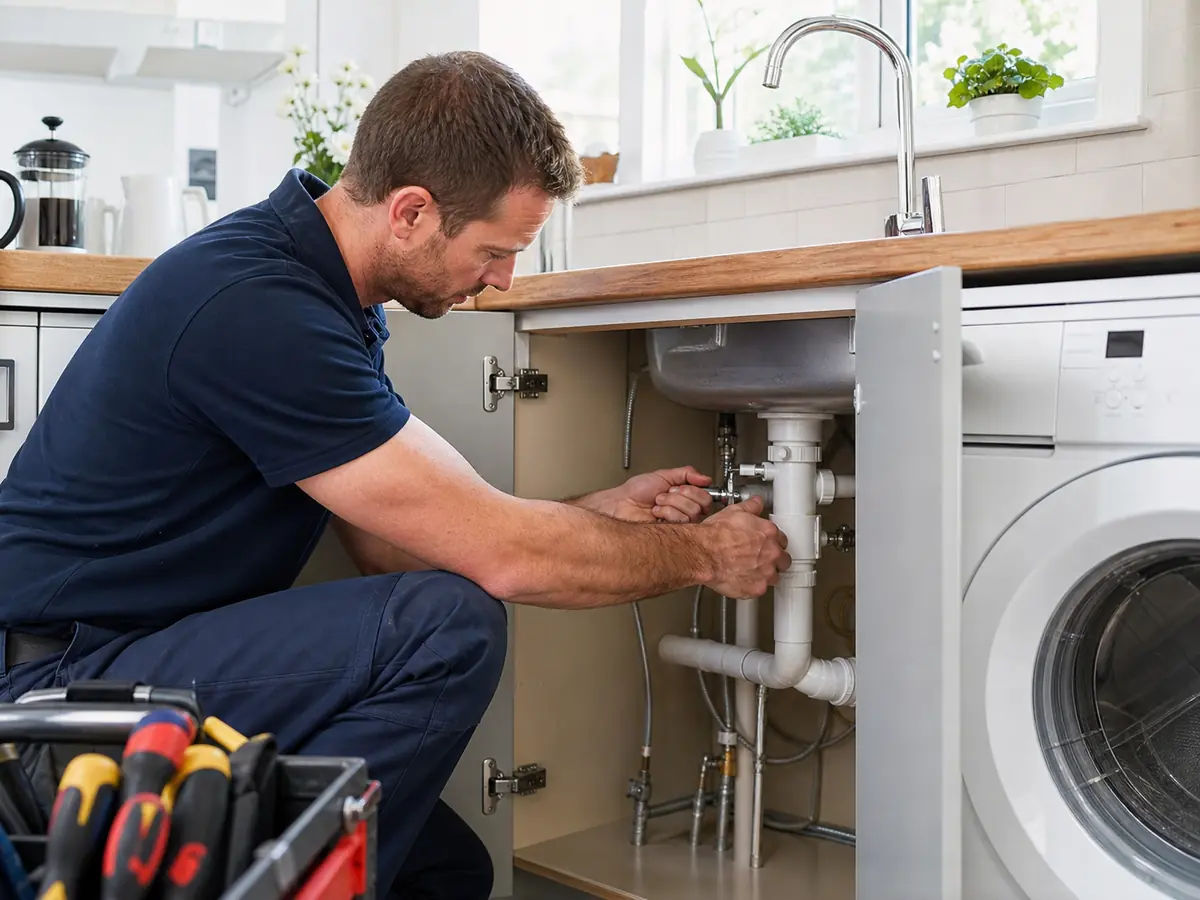
In most UK houses the stopcock is under the kitchen sink, because that is usually where the water main comes up through the floor. It is a small brass or chrome tap on a vertical pipe, sometimes with a round handle and sometimes with a lever. If it is not under the sink, follow the rising main back from the kitchen cold tap.
Where it ends up depends a lot on the age and layout of the property. Across Stoke-on-Trent there is a mix of Victorian and Edwardian terraces, inter-war semis, post-war council-built homes and newer estates, and each tends to hide the stopcock somewhere slightly different.
| Type of home | Common stopcock locations |
|---|---|
| Older terrace | Under the kitchen sink, in the cellar, or under the front room floorboards near the front wall |
| Semi-detached or detached house | Under the kitchen sink, under the stairs, in the garage or utility room |
| Newer build | Under the kitchen sink or in a downstairs toilet, often next to the boiler pipework |
| Flat or apartment | Kitchen, bathroom, airing cupboard, or a communal cupboard shared with other flats |
| Converted or extended home | Wherever the original kitchen was, which may now be a different room |
How do I find a stopcock that is not under the sink?
Start outside and work in. Find where the water supply enters your property, usually at the front, and look for the internal pipe on that wall. The stopcock is normally fitted within a short distance of where the pipe comes through the floor or wall, so check the rooms along that side of the house first.
If that does not help, try these in order:
- Look at the pipe feeding the kitchen cold tap and trace it downwards and back through the units.
- Check cupboards under the stairs, the back of built-in wardrobes on the ground floor and any cellar.
- Look for a small removable panel in a kitchen plinth or bath panel.
- Ask your landlord, managing agent or the previous owner. For flats, the building manager should know where each flat is isolated.
How do I test my stopcock?
Testing is simple: turn it off, check the water stops, then turn it back on. Turn the handle clockwise until it is firmly closed, without forcing it. Open the kitchen cold tap; after a few seconds of draining the flow should stop completely. If it keeps running, the valve is not sealing and needs attention.
- Close the stopcock by turning it clockwise until it stops.
- Open the kitchen cold tap and wait for the pipe to drain. The flow should slow to nothing.
- Turn the stopcock back on anticlockwise, slowly, so you do not send a surge of air and water through the pipes.
- Once it is fully open, turn it back a quarter turn so it is less likely to seize in the open position.
- Close the kitchen tap and check the stopcock itself for drips around the spindle.
If you have a combi boiler, expect the hot water to stop too while the mains is off. That is normal. Once the water is back on, check the boiler pressure gauge is where it should be.
What if the stopcock is stuck or will not turn?
If the stopcock will not turn by hand, stop there and do not reach for a large wrench. Older brass valves that have not moved for years can shear at the spindle or crack under force, and then you have an uncontrolled leak with no way of isolating it. A stiff valve should be replaced before winter, not wrestled.
The usual fix is to fit a new stopcock or a quarter-turn lever valve, which is much easier to shut in an emergency. That job means turning off the supply outside, so it is work for a plumber rather than a quick DIY fix. A stopcock that turns but does not stop the flow, or one that drips from the spindle, needs the same treatment. Our plumbing services in Stoke-on-Trent cover this kind of routine repair.
Where is the outside stop tap and who is responsible for it?
The outside stop tap sits under a small metal or plastic cover in the pavement, front path or driveway, usually near your boundary. It belongs to your water supplier and needs a long stop tap key to reach. In most cases the supplier is responsible for the pipe up to the boundary, and you are responsible for the supply pipe from there into the house.
You should not normally need the outside tap, and in terraced streets one cover can serve more than one property. If your internal stopcock fails and water is pouring out, call your water supplier as well as a plumber. The Consumer Council for Water explains how responsibility for supply pipes is usually split.
What else should I do while I am there?
Once you know where the stopcock is, make it easy for anyone in the house to use in a panic. Clear the cupboard in front of it, label it, and show everyone who lives there, including teenagers and lodgers. If you let the property, note its location in the tenant information pack.
Tip: Hang a brightly coloured tag on the stopcock and stick a note inside the front of the cupboard saying "WATER OFF: turn clockwise". In an emergency people rarely remember which way to turn it.
It is also a good time to find your gas emergency control valve, normally the lever next to the gas meter. If you ever smell gas, that is the valve you turn off before calling 0800 111 999. Our guide on what to do if you smell gas explains the full sequence.
Knowing where the stopcock is also matters for a water leak from the boiler or heating pipes. If you have seen drips under the boiler, read our advice on water leaking from a boiler.
Getting help with a stopcock or leak in Stoke-on-Trent
If your stopcock is seized, leaking or impossible to find, it is worth getting it sorted while the weather is warm. And if water is already coming through a ceiling, our emergency plumber in Stoke-on-Trent can help once you have done what you can to isolate it. Call 07896 677083.
A handy moment to ask about the stopcock is when the engineer is already there. If you are booking a boiler service in Kidsgrove or a boiler service in Biddulph, ask us to check the stopcock turns freely while we are with you.
Frequently asked questions
Which way do you turn a stopcock to turn the water off?
Clockwise closes a stopcock and anticlockwise opens it, the same as most taps. Lever-type valves are closed when the lever sits across the pipe and open when the lever lines up with the pipe.
Will turning off the stopcock stop the heating from working?
A sealed central heating system does not draw water from the mains while it runs, so the heating will usually carry on working. A combi boiler will not produce hot water while the mains is off, and you should not top up the heating pressure until the supply is back on.
How often should I test my stopcock?
Once a year is enough for most homes. Late summer or early autumn is a good time, because any stuck or leaking valve can be replaced before freezing weather makes a burst pipe more likely.
Can I turn off the outside stop tap myself?
The outside stop tap belongs to the water supplier and needs a special key. In a genuine emergency where the internal stopcock has failed, contact your water supplier, as the outside tap may also serve a neighbouring property.
Sources and further reading

Gasmaster Plumbing & Heating has served Stoke-on-Trent since 2005. Every article is written by our Gas Safe registered engineers (reg. 220932) from day to day work on boilers, heating and gas appliances across Staffordshire, Cheshire and Derbyshire.