On this page
- Pressure or flow? Why the difference matters
- Step-by-step checks for low water pressure
- What pressure must the water company supply?
- Common causes of low water pressure in a house
- Who to call about low water pressure
- Boosting pressure: pumps, accumulators and the rules
- Low water pressure and your boiler
- Get your water pressure back
- Frequently asked questions
Key takeaways
- Check the internal stopcock first. A valve left part closed after plumbing work is one of the most common causes.
- A simple bucket test measures flow. As a rule of thumb, the kitchen tap should fill a 4.5 litre container in about 30 seconds.
- The guaranteed minimum from your water company is 7 metres head (0.7 bar) at the outside stop valve. Below that, on repeated occasions, compensation may be due.
- Your water company owns the pipe up to the outside stop valve. The supply pipe from there into the house is the homeowner’s responsibility.
- Fitting a booster pump that draws more than 12 litres per minute from the mains must be notified to the water company first.
Low water pressure in the house, where every tap and shower runs weakly, usually comes from one of four things: a stopcock that is not fully open, a problem in your water company’s network, an old or leaking supply pipe between the street and your home, or narrow or scaled pipework inside. Start with the internal stopcock, then test the kitchen tap flow, then check with your water company. Those three steps tell you whether the fix is yours or theirs.
This guide covers weak cold water across the whole property. If it is only the hot water on a combi that runs slowly, our separate guide to combi boiler low hot water pressure covers boiler-side causes.
Pressure or flow? Why the difference matters
People say “pressure” for both, but plumbers separate them. Pressure is the force pushing the water, measured in bar or metres head. Flow is how much water actually comes out, in litres per minute. You can have decent static pressure with poor flow if a pipe is narrowed by scale or a valve is partly shut. Weak showers and slow-filling baths are a flow problem first.
That matters because the fixes differ. A part-closed valve or a furred-up old pipe will not be helped by the water company raising pressure in the street. A genuinely low network pressure cannot be fixed by anything inside your house except storage and a pump.
Step-by-step checks for low water pressure
Work from inside the house outwards. Each step rules something in or out.
- Ask the neighbours. If the street has the same problem today, it is almost certainly the network: a burst main, repairs or high demand. Check your water company’s website for incidents.
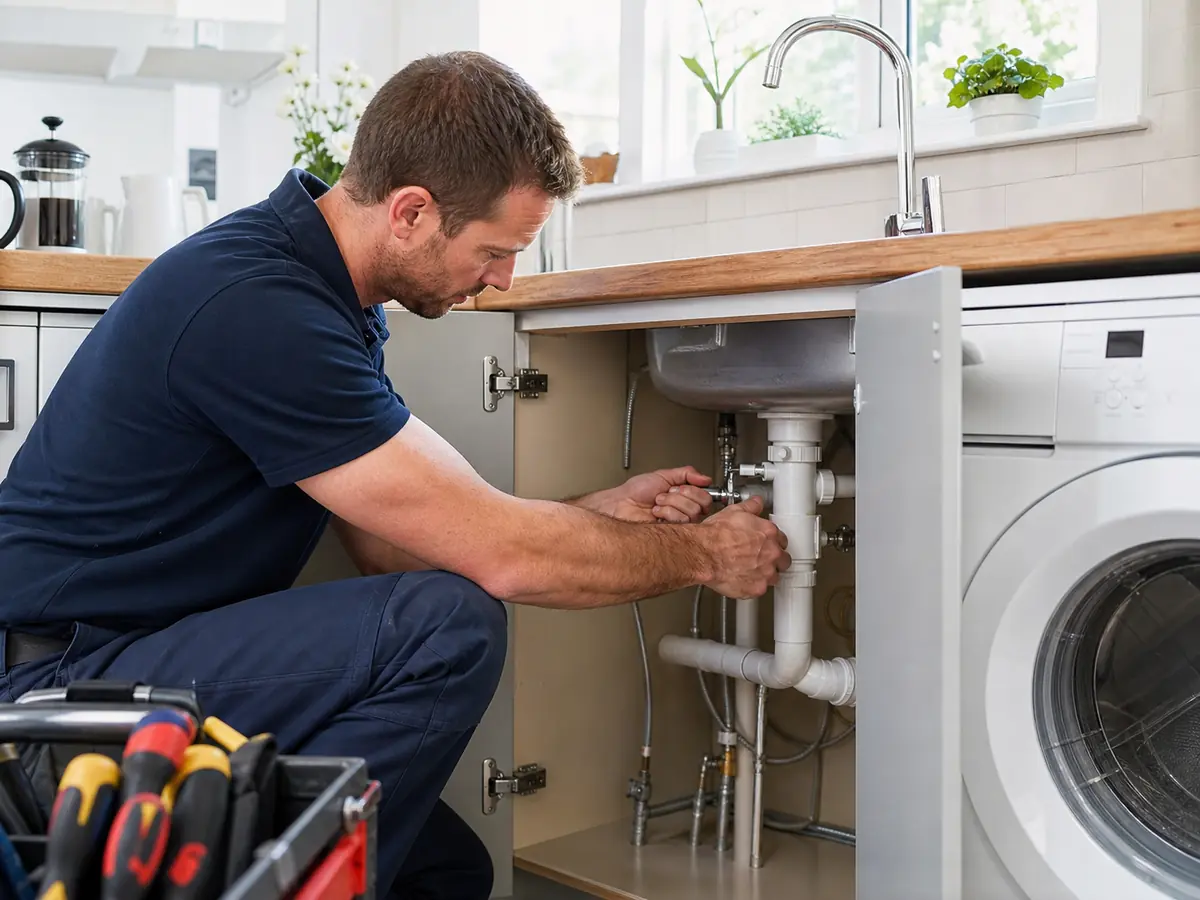
- Check the internal stopcock. It is usually under the kitchen sink, near the front door or in a downstairs cupboard. Turn it anti-clockwise until it stops, then back a quarter turn. Our guide on how to find and test your stopcock shows what to look for.
- Check small isolation valves on pipes to taps, toilets and appliances. A slot that is not lined up with the pipe means the valve is partly shut.
- Do a bucket test at the kitchen tap. Turn off every other tap and appliance, then time how long the cold kitchen tap takes to fill a container of known size.
- Look for patterns. Weak in the morning and early evening, fine at other times, points to local demand on the network.
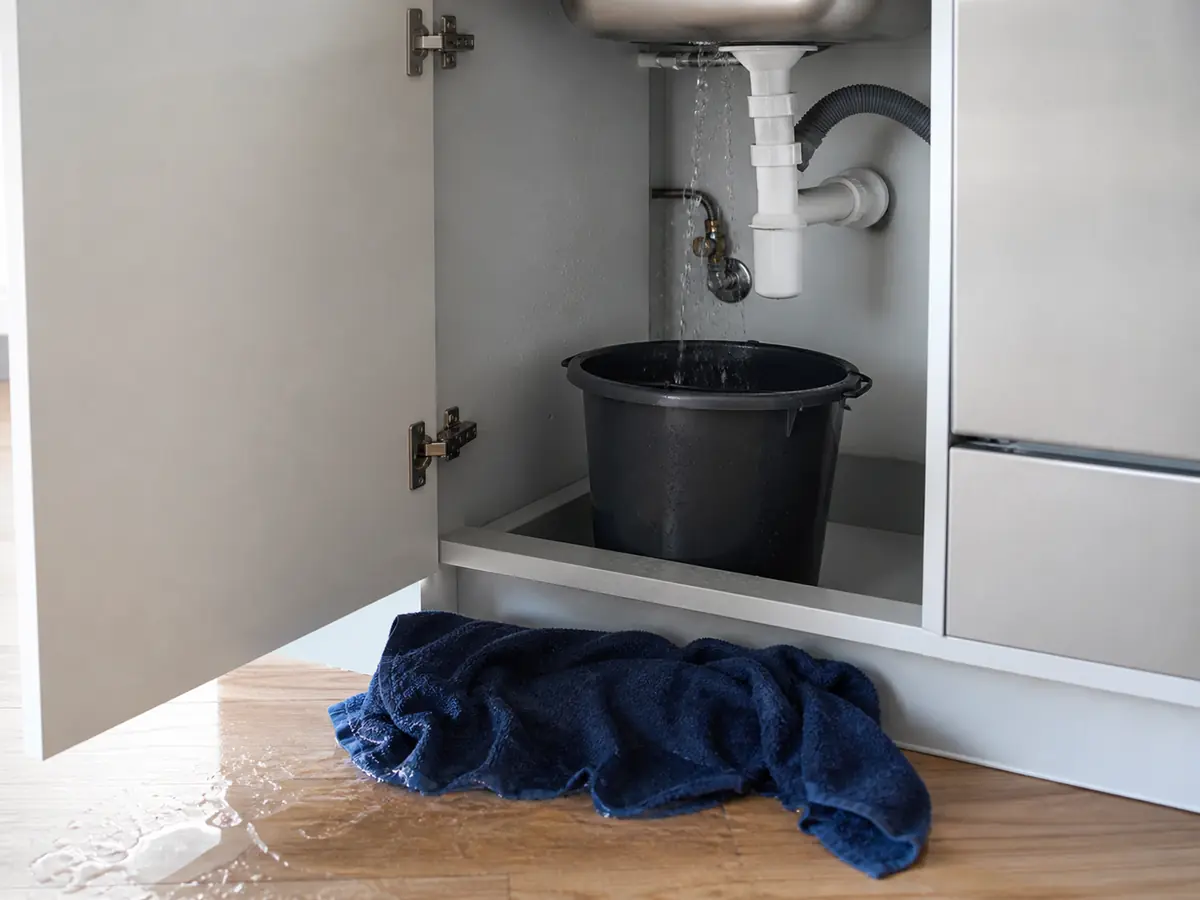
- Check for leaks. With all taps off, watch the water meter if you have one. If it still moves, water is escaping somewhere.
- Contact your water company and ask them to test the pressure at your outside stop valve.
What pressure must the water company supply?
The legal minimum is lower than many people expect. According to the Consumer Council for Water’s low pressure factsheet:
- The guaranteed standard is 7 metres head (0.7 bar) in the company’s pipe, measured at the outside stop valve.
- Ofwat also monitors properties at risk of pressure below 10 metres head (1 bar) at a flow of 9 litres per minute.
- Under the Water Industry Act 1991, supply must be at a pressure that reaches the upper floor of a house.
- If pressure falls below 0.7 bar on two occasions, each lasting over an hour, within 28 days, a guaranteed standards payment should be made automatically, subject to exceptions such as necessary works, drought or a payment already made that year.
The flow rule of thumb from WaterSafe is that the first tap in the house should fill a 4.5 litre (one gallon) container in about 30 seconds, roughly 9 litres per minute. If yours is well below that with everything else off, record the results and the times and give them to your water company. CCW suggests keeping a log for around two weeks so patterns show up.
Common causes of low water pressure in a house
| Cause | Clues | Whose job |
|---|---|---|
| Part-closed stopcock or isolation valve | Started after plumbing work or a new appliance | Homeowner: open it fully |
| Network problem: burst, repairs, peak demand | Neighbours affected; worse at busy times | Water company |
| Leak on the supply pipe | Meter moves with taps off; damp patch outside; drop in pressure over time | Homeowner (some companies help with repairs) |
| Old lead or galvanised steel supply pipe | Older property; weak flow even when the street is fine | Homeowner: replace the supply pipe |
| Scale or corrosion in internal pipes | Gradual decline over years; hard water area | Homeowner: plumber to replace sections |
| Faulty pressure-reducing valve | Sudden drop on a newer installation | Homeowner: plumber to check or replace |
| Shared supply pipe | Pressure drops when a neighbour uses water | Shared owners; ask the water company about a separate supply |
Leaks on the supply pipe
A leak between the outside stop valve and your house can waste a lot of water and reduce what reaches your taps. Signs include a meter that keeps moving with everything off, a patch of grass that stays green or wet, damp near where the pipe enters the house, or unexplained rises in your water bill. Our guide to signs of a hidden water leak walks through the checks.
Old pipework in older homes
Many older terraced and semi-detached homes still have their original supply pipe. Lead pipe was used for water supplies in older properties, and narrow galvanised steel pipe corrodes on the inside, shrinking the bore. Replacing the supply pipe with modern plastic of the right size often transforms flow. Your water company may have a lead pipe replacement scheme, so ask before booking the work.
Who to call about low water pressure
Use this rule: if the problem is on the street side of the outside stop valve, or affects your neighbours too, call the water company. Their number is on your water bill. If it is between the outside stop valve and your taps, it is your responsibility, and a plumber is the right call.
Gasmaster’s plumbing services cover checking and replacing stopcocks, tracing leaks, and replacing old internal and supply pipework.
Boosting pressure: pumps, accumulators and the rules
When the supply itself is low and cannot be improved, there are ways to get better flow inside the home:
- Cold water storage with a pump. Water fills a tank slowly, and a pump delivers it to taps and showers at higher flow.
- Accumulators. Pressurised vessels that store mains water during quiet periods and release it at peak times.
- Shower pumps on gravity-fed systems with a loft tank. See our guide to the loft cold water tank.
Do not fit a pump straight onto the incoming mains to pull more water. Under the Water Supply (Water Fittings) Regulations 1999, a pump or booster drawing more than 12 litres per minute, connected directly or indirectly to a supply pipe, must be notified to the water company before it is installed. Pulling hard on the mains can also reduce pressure for your neighbours and risks drawing contaminated water back into the supply.
Low water pressure and your boiler
Low mains pressure affects more than taps. A combi boiler can only deliver hot water as fast as the mains supplies it, and some combis will not fire for hot water if flow falls below their minimum. Unvented cylinders also need a minimum mains pressure and flow to perform as designed. If you are planning a new boiler, have the installer measure both pressure and flow at survey so the system suits your supply.
Mains pressure is a separate thing from the pressure shown on your boiler’s gauge. The boiler gauge shows the sealed heating circuit, which has nothing to do with how your taps run. See our guide on repressurising a combi boiler if that gauge is low.
Get your water pressure back
Open the stopcock fully, run the bucket test, check for leaks and talk to the neighbours. If the street is fine but your flow is weak, the problem is almost certainly on your side of the outside stop valve, and a plumber can trace and fix it.
Gasmaster’s engineers handle plumbing and heating across Stoke-on-Trent, Staffordshire, Cheshire and Derbyshire. Contact us to book a plumber, or call our emergency plumber service if you have a burst or a major leak.
[googlesitekit-end-of-content]
Frequently asked questions
Why has my water pressure suddenly dropped?
A sudden drop usually means a burst main or repair work nearby, a valve accidentally closed, or a new leak. Ask neighbours and check your water company’s website for incidents first. If only your home is affected, check the stopcock and look for signs of a leak inside and outside the property.
How can I test my water pressure at home?
The simplest test is flow: with all other taps off, time how long the cold kitchen tap takes to fill a 4.5 litre container. About 30 seconds is the rule of thumb. For a true pressure reading, a plumber can fit a gauge to an outside tap, or your water company can test at the outside stop valve.
Is low water pressure in only the kitchen tap a whole-house problem?
Not usually. If only the kitchen tap is weak, check its aerator for scale or grit and the isolation valve under the sink. The kitchen tap is normally fed directly from the mains, so if it is weak while other mains-fed taps are fine, the problem is local to that tap or its pipe.
Can the water company fix low pressure for free?
If the cause is in their network, yes, it is their job to investigate and fix. If pressure falls below the guaranteed standard on repeated occasions, you may also receive a payment. Problems on your own supply pipe or internal plumbing are your responsibility, though some companies offer help with supply pipe leak repairs.
Related services

Abdul runs Gasmaster Plumbing & Heating and has worked on boilers, heating and gas appliances across Stoke-on-Trent since 2005. He is Gas Safe registered (reg. 220932), and these articles come from his day to day work in homes and businesses across Staffordshire, Cheshire and Derbyshire.