On this page
- How do I know if my condensate pipe is frozen?
- Where does a condensate pipe usually freeze?
- How do I thaw a frozen condensate pipe safely?
- What if the boiler still will not restart?
- How can I stop my condensate pipe freezing?
- Are some homes more at risk than others?
- Getting a condensate pipe checked before winter
- Frequently asked questions
Quick answer
If your condensing boiler gurgles and locks out in freezing weather, the condensate pipe has probably frozen. Find the frozen section outside, usually at a bend or the open end, and pour warm (never boiling) water over it or hold a hot water bottle against it. Then reset the boiler once, following the manual.
Key takeaways
- Gurgling followed by a lockout in a frost usually means a frozen condensate pipe.
- Thaw it with warm water or a hot water bottle, never boiling water.
- Reset the boiler once using the manual; call an engineer if it locks out again.
- Insulating the external run now is the best prevention.
Every condensing boiler produces water as it runs, and that water has to drain away through a plastic condensate pipe. When part of that pipe runs outside, a hard frost can turn the water to ice, the boiler senses the blockage and shuts itself down. It is one of the most common winter call-outs, and in many cases you can put it right yourself in a few minutes.
How do I know if my condensate pipe is frozen?
The classic signs are a gurgling or bubbling sound from the boiler, followed by the boiler locking out and showing a fault code, usually on a cold morning after a night below freezing. The heating and hot water stop. If the pipe runs outside and the weather is freezing, a frozen condensate pipe is the most likely cause.
The fault code itself varies by manufacturer. Some boilers show a specific condensate blockage code, while others show a general ignition or flame failure code, because the backed-up water affects how the boiler fires. Your manual lists the codes for your model. Other clues:
- The problem started during or just after a cold snap.
- The boiler tries to light, gurgles, then gives up.
- You can see ice at the end of the pipe or around a bend.
- Neighbours with similar boilers are having the same trouble.
Where does a condensate pipe usually freeze?
It usually freezes at the most exposed point: the open end where it drains into a gully, a bend where water collects, or a long run fixed to an outside wall. Thin pipes freeze fastest, and a pipe with little fall holds water that sits still long enough to turn to ice.
Follow the white or grey plastic pipe from the bottom of the boiler to where it leaves the house. Once outside, check the whole length, paying most attention to the bottom end and any bends. Ice may be visible, or the pipe may simply feel colder and more solid at one point.
How do I thaw a frozen condensate pipe safely?
Warm the frozen section gently until the ice melts. Pour warm water over the pipe from a watering can or jug, or hold a hot water bottle or microwavable heat pack against it. Start at the lowest point and work upwards. Once it is clear, reset the boiler following the manufacturer's instructions. Manufacturers such as Worcester Bosch publish their own thawing advice, so check what yours recommends.
- Find the frozen section, usually at the open end or a bend.
- Fill a watering can or jug with warm water. Water from a kettle that has been left to cool for a while is fine; boiling water is not.
- Pour it slowly along the frozen section, or hold a hot water bottle against it. Repeat until you hear or see water draining.
- Go back inside and reset the boiler once, following the reset procedure in your manual.
- If it fires and runs normally, keep an eye on it for the rest of the cold spell.
Stay safe: Never use boiling water, as it can crack the plastic pipe and scald you. Never use a blowtorch or any naked flame. Do not climb a ladder in icy conditions to reach a high pipe; call an engineer instead. Do not cut or disconnect the pipe, and never remove the boiler casing. Pouring water on paths can also create ice, so take care where you step.
What if the boiler still will not restart?
If the boiler locks out again after one reset, stop and call a Gas Safe registered engineer. Repeated resetting will not clear a blockage further up the pipe or inside the boiler's condensate trap, and on some boilers too many resets in a row can cause a harder lockout.
It is also possible that the pipe was not the problem. A boiler can lock out in cold weather for other reasons, including low pressure, a gas supply issue or an ignition fault. Our guide on why a boiler keeps locking out covers the wider list. If you have a vulnerable person at home and no heating, say so when you call; our emergency boiler repair service is there for exactly that situation.
How can I stop my condensate pipe freezing?
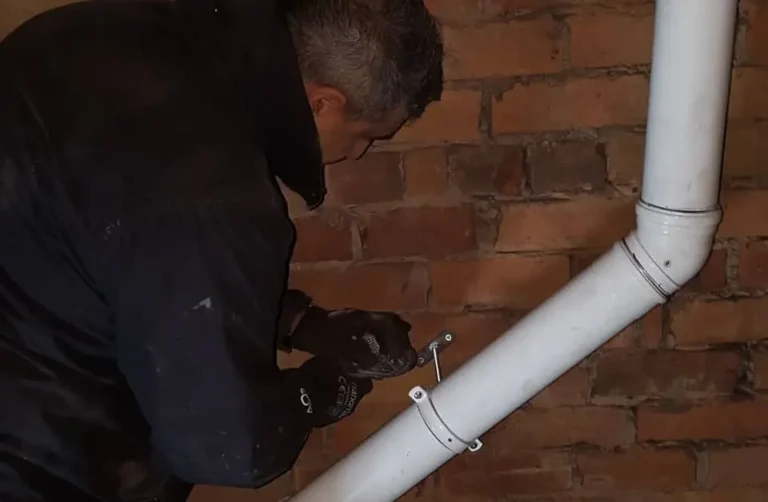
The best prevention is to make sure the external section is short, wide enough and well insulated. Manufacturer guidance generally calls for condensate pipe running outside to be at least 32mm in diameter and insulated, with a good fall and as short an external run as possible. Many older installations were fitted with narrower pipe that freezes easily.
| Fix | Who does it | What it achieves |
|---|---|---|
| Waterproof pipe insulation on the external run | Householder | Slows freezing during an ordinary frost |
| Upsizing the external pipe to at least 32mm | Engineer or plumber | Much harder for the bore to freeze solid |
| Rerouting the pipe internally to a waste pipe or soil stack | Engineer or plumber | Removes the external run altogether where the layout allows |
| Correcting a poor fall or dips in the pipe | Engineer or plumber | Stops water sitting in the pipe between firings |
August is the ideal time to sort this. The condensate pipe is checked during an annual service, and if yours looks vulnerable the engineer can advise on the most practical fix. Our post on condensate pipe checks during a service explains what they look at.
Are some homes more at risk than others?
Yes. Homes on higher, exposed ground get harder and longer frosts, so condensate pipes there freeze more often. Around here that includes the Staffordshire Moorlands and the Peak District fringe. Pipes on north-facing walls, in wind tunnels between houses, or running along a garage or outbuilding are also at higher risk.
If your boiler has frozen up before, treat it as a sign the installation needs improving, not bad luck. It is also worth adding the job to your winter boiler checklist alongside the other checks.
Getting a condensate pipe checked before winter
If your condensate pipe runs outside and has never been looked at, now is a good time, while the weather is warm and the job is a quick one. We can check it as part of an annual service, and upsize or reroute it if needed.
We cover exposed areas where frozen pipes are a regular winter issue, including boiler service in Buxton and boiler service in Cheadle, as well as the whole of Stoke-on-Trent. Call 07896 677083 to arrange a visit.
Frequently asked questions
Can I use a hairdryer to thaw a condensate pipe?
It is safer to use warm water or a hot water bottle. Using a mains electrical appliance outdoors in wet, icy conditions carries a risk of electric shock, and the pipe is often awkward to reach safely.
Will a frozen condensate pipe damage my boiler?
The boiler is designed to shut down when the condensate cannot drain, which protects it. Once the pipe thaws and the boiler is reset correctly, it will normally run as before, but repeated freezing is a sign the pipework needs improving.
Can I keep the boiler running to stop the pipe freezing?
A boiler running steadily keeps warm condensate moving through the pipe, which can help in a mild frost. It will not stop a poorly installed pipe freezing in a hard frost, so insulation and correct pipe size are the real fix.
Is a frozen condensate pipe covered by a boiler warranty?
Manufacturers usually treat freezing as a weather or installation issue rather than a boiler fault. Check your warranty terms, and ask your installer or engineer whether the external pipe meets the manufacturer's installation guidance.
Sources and further reading

Gasmaster Plumbing & Heating has served Stoke-on-Trent since 2005. Every article is written by our Gas Safe registered engineers (reg. 220932) from day to day work on boilers, heating and gas appliances across Staffordshire, Cheshire and Derbyshire.