On this page
- Why LPG equipment cannot just be plugged into mains gas
- Which catering appliances can be converted?
- What the conversion involves
- Choosing the right engineer for the job
- From trailer to kitchen: what else changes
- Should you convert or buy natural gas equipment?
- Plan the conversion before you sign the fit-out
- Frequently asked questions
Key takeaways
- LPG and natural gas burn differently and are supplied at different pressures, so an appliance set up for one is unsafe on the other without conversion.
- Only convert an appliance if the manufacturer lists it for both gas types and supplies an approved kit or parts. The data plate and installation manual are the place to check.
- A typical conversion changes injectors, sets the low rate, checks pressures and replaces the data plate and labels. It is never a DIY job.
- The engineer needs the right Gas Safe categories: commercial catering for natural gas and the relevant LPG categories if they also work on your trailer.
- A fixed kitchen also needs suitable pipework, ventilation, often a gas interlock, and a CP42 commercial gas safety record.
Many catering appliances can be converted from LPG to natural gas, but only if the manufacturer approves that model for both gas types and supplies the conversion parts, and only by a Gas Safe registered engineer qualified for commercial catering. The job usually means changing burner injectors, adjusting or replacing gas controls, setting low-rate and pressures, and fitting a new data plate. If you want to convert LPG to natural gas catering equipment when moving from a trailer to a premises, check each appliance’s data plate and manual before you plan the kitchen around it.
This guide is for street food traders, mobile caterers and event caterers moving into a shop, cafe or unit with a mains gas supply. It covers which equipment can switch, what the conversion involves, and the extra steps a fixed commercial kitchen needs.
Why LPG equipment cannot just be plugged into mains gas
LPG (propane or butane) and natural gas are different fuels. They have different energy content per cubic metre, need different amounts of air to burn, and are supplied at different pressures. A burner is designed around those numbers, mainly through the size of the injector, the small brass jet that meters gas into the burner.
The difference in supply pressure is clear in UK manufacturer documentation. The installation manual for Parry’s PGG6 and PGG7 griddles, for example, lists:
| Gas | Category | Supply pressure |
|---|---|---|
| Natural gas | G20 | 20 mbar |
| Butane | G30 | 28 mbar |
| Propane | G31 | 37 mbar |
Run an LPG-jetted appliance on natural gas and it will usually be underfired, with weak, unstable flames that can lift off the burner or fail to light properly. Run a natural gas appliance on LPG and it will be badly overfired, producing large yellow flames, soot and carbon monoxide. Either way the appliance is unsafe, and an engineer finding it in use would treat it as unsafe and disconnect it.
LPG is also heavier than air and natural gas is lighter, which affects how leaks behave and how appliances, flues and ventilation are arranged. That is one reason a kitchen designed around mains gas is laid out differently from a trailer running on cylinders.
Which catering appliances can be converted?
The deciding factor is the manufacturer, not the engineer. An appliance can be converted only if the manufacturer has certified that model for the other gas type and provides the parts and instructions to do it. Look for:
- The data plate. It shows the gas category and pressure the appliance is currently set for, and often the countries and gas categories it is approved for.
- The installation manual. Convertible appliances have a gas conversion section listing injector sizes or part numbers for each gas.
- A conversion kit. Some manufacturers supply both sets of injectors with the appliance; others sell a kit by model number.
If the manual has no conversion section, or the manufacturer says the model is LPG only, do not convert it. Budget for a natural gas version instead. Older or imported appliances with no traceable documentation are the most likely to fall into this group.
| Situation | Usually |
|---|---|
| Manual lists both gases and parts are available | Can be converted by a qualified engineer |
| Manufacturer supplies a kit by model number | Can be converted, using that kit only |
| Appliance is LPG only, or no documentation | Do not convert; replace for natural gas |
| Appliance is damaged, modified or missing its data plate | Engineer is unlikely to commission it |
What the conversion involves
Each manufacturer’s steps differ, but the Parry manual gives a typical picture. It states the conversion must be done by a competent, qualified person, and the process includes:
- Isolating the gas and electrics and removing the front fascia.
- Disconnecting ignition leads and the gas feed to each burner.
- Replacing the LPG injectors with the natural gas injectors supplied.
- Reassembling the burners and aerators.
- Adjusting the low-rate or simmer setting on each control tap, which is factory sealed and must be resealed after adjustment.
- Replacing the labels and data plate with the natural gas versions provided.
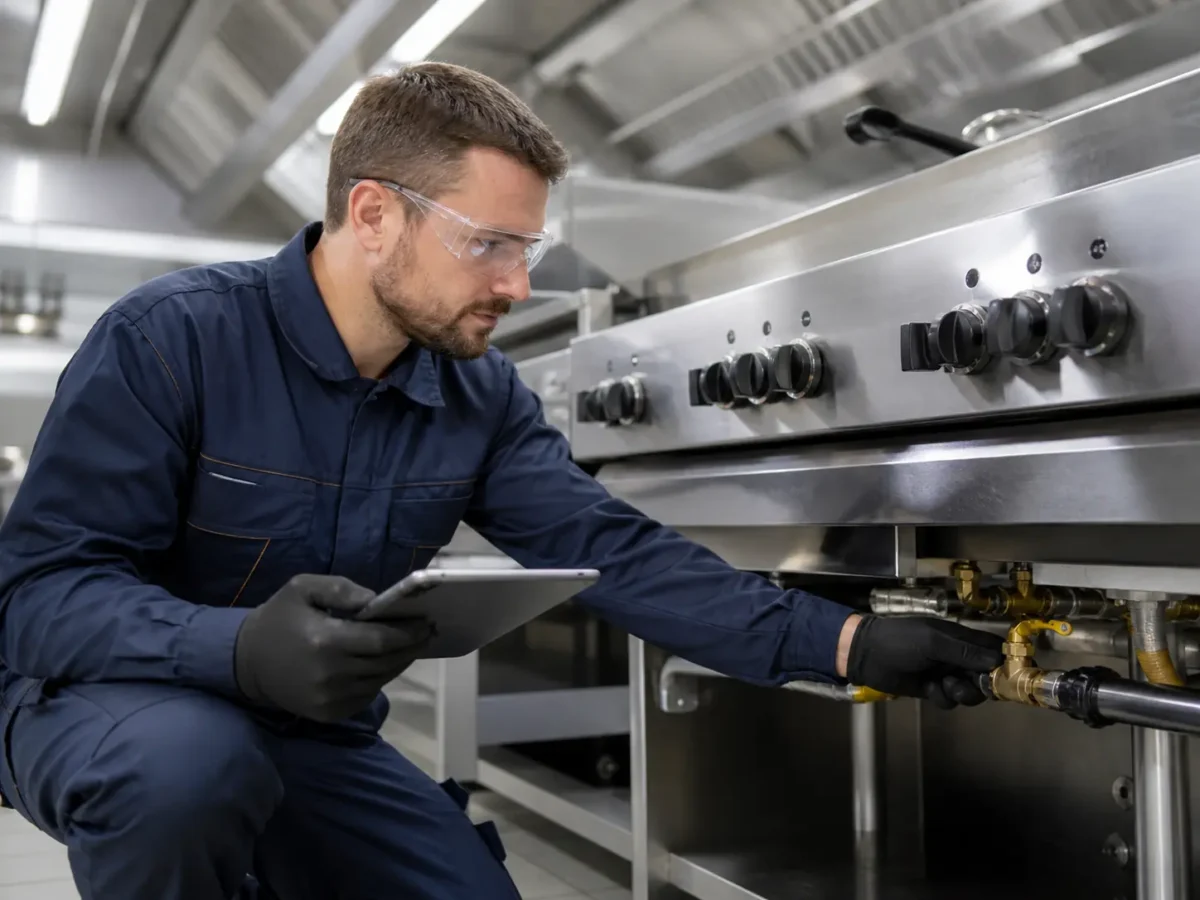
After the parts are changed, the engineer connects the appliance, checks the supply and burner pressures against the manufacturer’s figures, tests for gas tightness, checks flame picture and ignition, confirms flame failure devices work, and records the work. Some appliances, such as fryers and ovens with gas valves and thermostats, may also need regulator or valve adjustments.
Do not swap jets yourself, even with a kit in hand. Gas work on catering appliances is illegal unless carried out by a Gas Safe registered engineer with the right qualifications, and incorrect conversion can produce carbon monoxide in a kitchen full of staff. Our article on whether DIY gas work is illegal in the UK explains the rules.
Choosing the right engineer for the job
Gas Safe registration is not a single licence. Engineers hold specific categories for each type of work. For your move, check that the engineer covers:
- Commercial catering on natural gas, including the appliance types you have, for the kitchen installation and conversion.
- LPG commercial or mobile catering, if they will also work on your trailer or any appliance still on LPG.
The National Caterers’ Association (NCASS) explains in its guide on checking an engineer is qualified for LPG work that the categories are listed on the back of the engineer’s Gas Safe ID card, and you can check them on the Gas Safe Register. Our guide on how to check a Gas Safe engineer walks through it.
From trailer to kitchen: what else changes
Converting the appliances is only part of moving indoors. A fixed commercial kitchen on mains gas has requirements that a food truck does not.
Pipework and supply
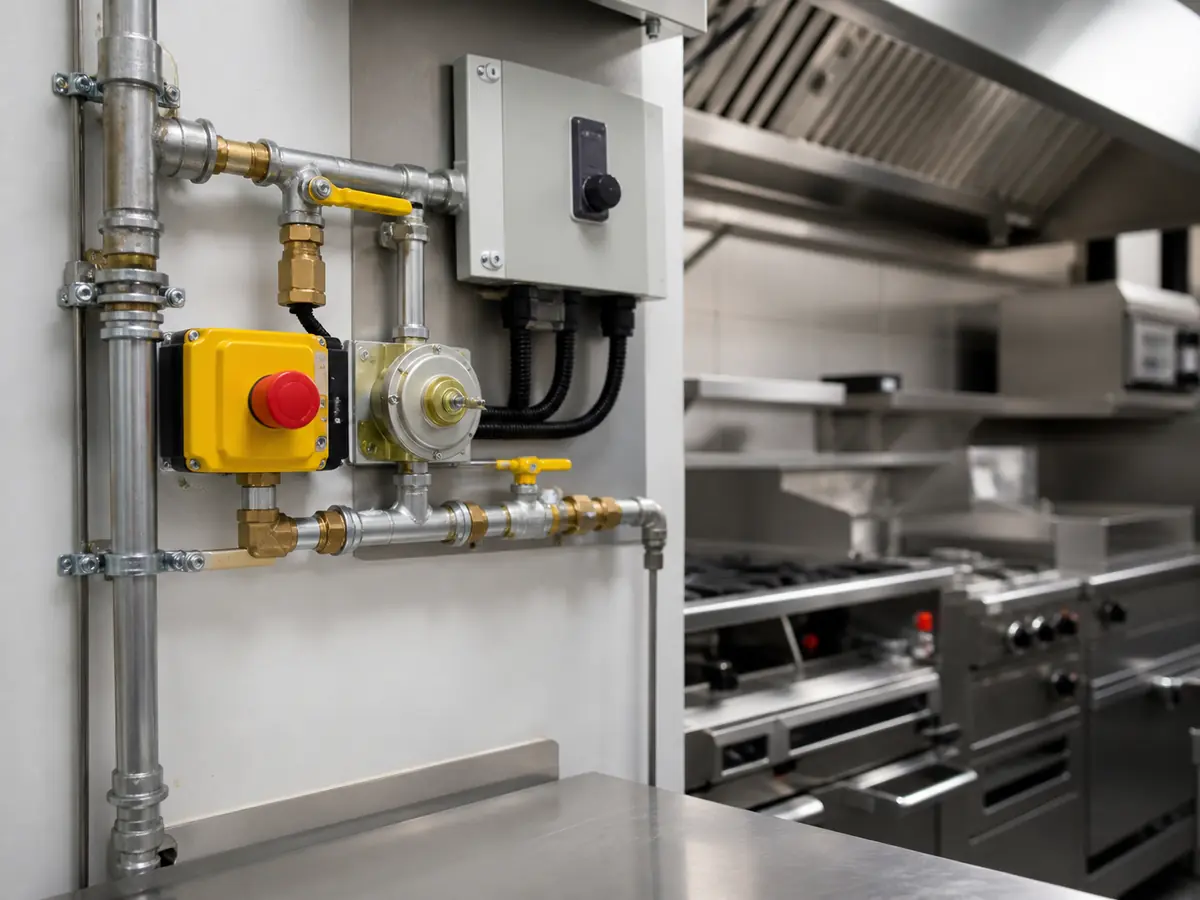
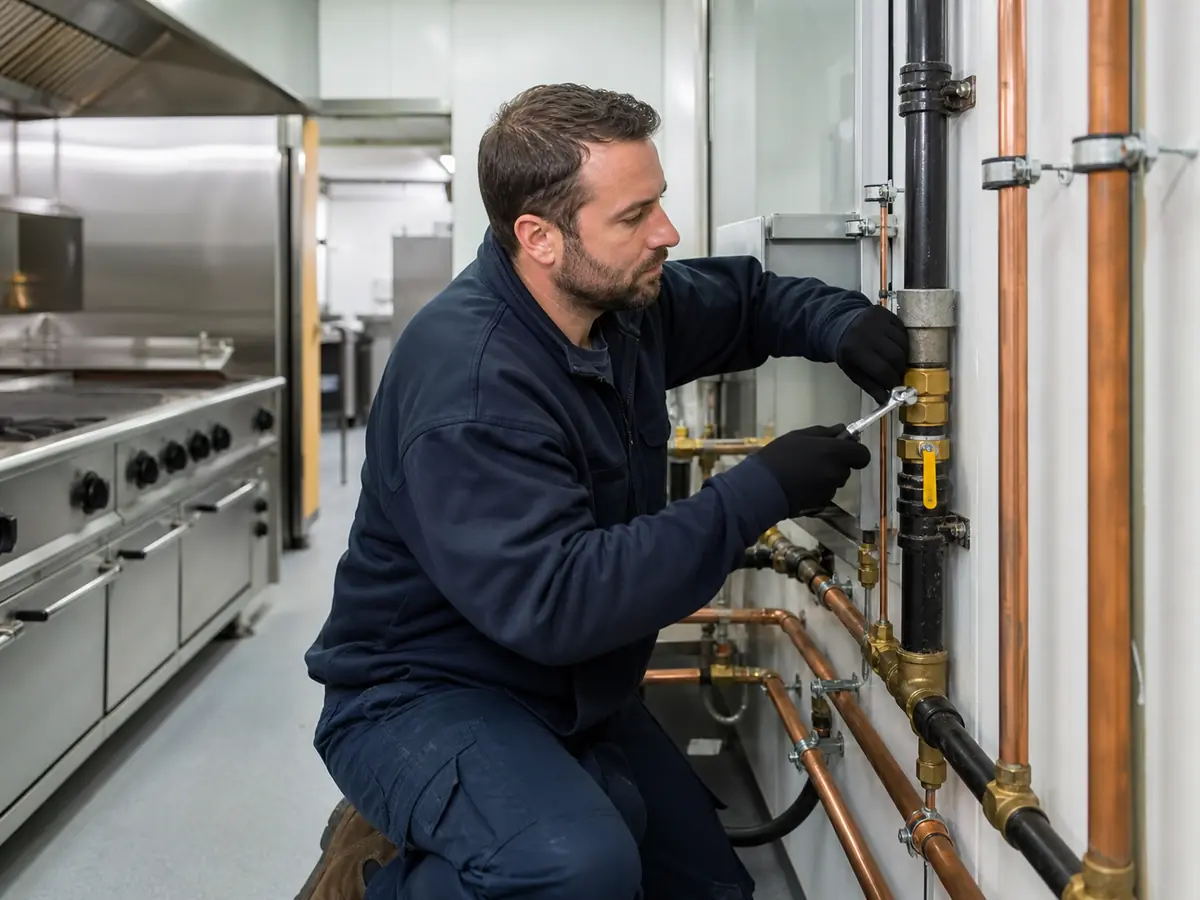
Mains gas needs properly sized pipework from the meter to each appliance, with an emergency control valve and isolation valves. The total load of your appliances decides pipe size and whether the meter is big enough. Our commercial kitchen gas pipe installation service covers design and installation.
Ventilation and interlock
Indoor gas cooking needs extraction and make-up air sized for the appliances. Where mechanical extraction is needed for appliances to work safely, the gas supply must be interlocked to it so it shuts off if the fans stop. Our guide to commercial kitchen ventilation for gas explains how extraction, make-up air and the interlock work together.
Certification
Your trailer may have had an LPG gas safety certificate. A fixed premises needs a commercial gas safety record, usually called a CP42, once the installation is complete. Our food truck gas safety certificate guide covers the mobile side; the CP42 certificate page covers premises.
Should you convert or buy natural gas equipment?
Converting makes sense when the appliance is in good condition, the manufacturer supports conversion, and parts are easy to get. It can also suit businesses that may return to events, as some appliances can be converted back later following the same manufacturer instructions.
Buying natural gas versions can be better when appliances are old, worn, LPG-only, or missing documentation, or when you need different capacity in the new kitchen. Ask your engineer to inspect each appliance before the fit-out so you know which will pass commissioning. If you are unsure of the gas differences in general, our explainer on LPG and mains gas covers the basics.
Plan the conversion before you sign the fit-out
Before you plan a kitchen around your existing kit, gather the data plates and manuals for every gas appliance, check which are approved for natural gas, and have an engineer confirm the list. That avoids discovering on commissioning day that half your line cannot be used.
Gasmaster’s commercial catering gas engineers convert, install and commission catering equipment across Stoke-on-Trent, Staffordshire, Cheshire and Derbyshire, and we also work with mobile caterers. Contact us to talk through your move.
[googlesitekit-end-of-content]
Frequently asked questions
Can I use my food truck equipment in a restaurant kitchen?
Often, yes, if each appliance is approved by its manufacturer for natural gas and is converted correctly by a qualified engineer. The kitchen also needs suitable pipework, ventilation and usually an interlock. Appliances that are LPG only, damaged or undocumented will need replacing with natural gas models before the kitchen can be commissioned.
How do I know what gas my catering appliance is set for?
Check the data plate, usually on the back, side or inside the door. It shows the gas category it is set for, such as G20 for natural gas or G30 and G31 for LPG, along with the supply pressure. Labels near the controls may also state the gas type. If there is no data plate, ask an engineer before using it.
Can a conversion be reversed later?
Many convertible appliances can be switched back by refitting the original injectors and settings, following the manufacturer’s instructions. It must be done by a qualified engineer each time, with the data plate and labels changed to match. Keep the original injectors and paperwork safe if you might return to mobile trading.
Is it legal to run LPG cylinders inside a fixed restaurant kitchen?
LPG can be used in some fixed premises, but storage and installation rules are strict, because LPG is heavier than air and pools at low level. Cylinders are generally stored outside in a secure, ventilated location. Talk to a Gas Safe engineer with LPG commercial categories before planning any indoor LPG installation.
Will my insurer need to know about the conversion?
Your insurer is likely to expect gas appliances to be installed and maintained by a Gas Safe registered engineer, with records to prove it. Keep the conversion record, commissioning paperwork and CP42 together and tell your insurer about the move to premises. Check your policy wording, as requirements vary between insurers.
Related services

Abdul runs Gasmaster Plumbing & Heating and has worked on boilers, heating and gas appliances across Stoke-on-Trent since 2005. He is Gas Safe registered (reg. 220932), and these articles come from his day to day work in homes and businesses across Staffordshire, Cheshire and Derbyshire.