On this page
- Should you still service an old boiler?
- What do older boilers typically need at a service?
- Which type of service suits an older boiler?
- Can you still get parts for an old boiler?
- When do repeated faults point to replacement?
- Is an old non-condensing boiler still safe to use?
- Servicing an older boiler in Stoke-on-Trent
- Frequently asked questions
Quick answer
Yes. An old boiler should still be serviced every year, because age brings perished seals, dirty heat exchangers and worn components that affect safety as well as efficiency. The service also gives you an honest read on its condition, which is the best basis for deciding whether to keep repairing it or plan a replacement.
Key takeaways
- Age makes a service more important, not less, because wear affects combustion and seals.
- Older boilers often benefit from an intermediate or full strip-down service.
- Discontinued parts, not age alone, are often what ends a boiler's life.
- Repeated faults and rising repair bills are the clearest sign to plan a replacement.
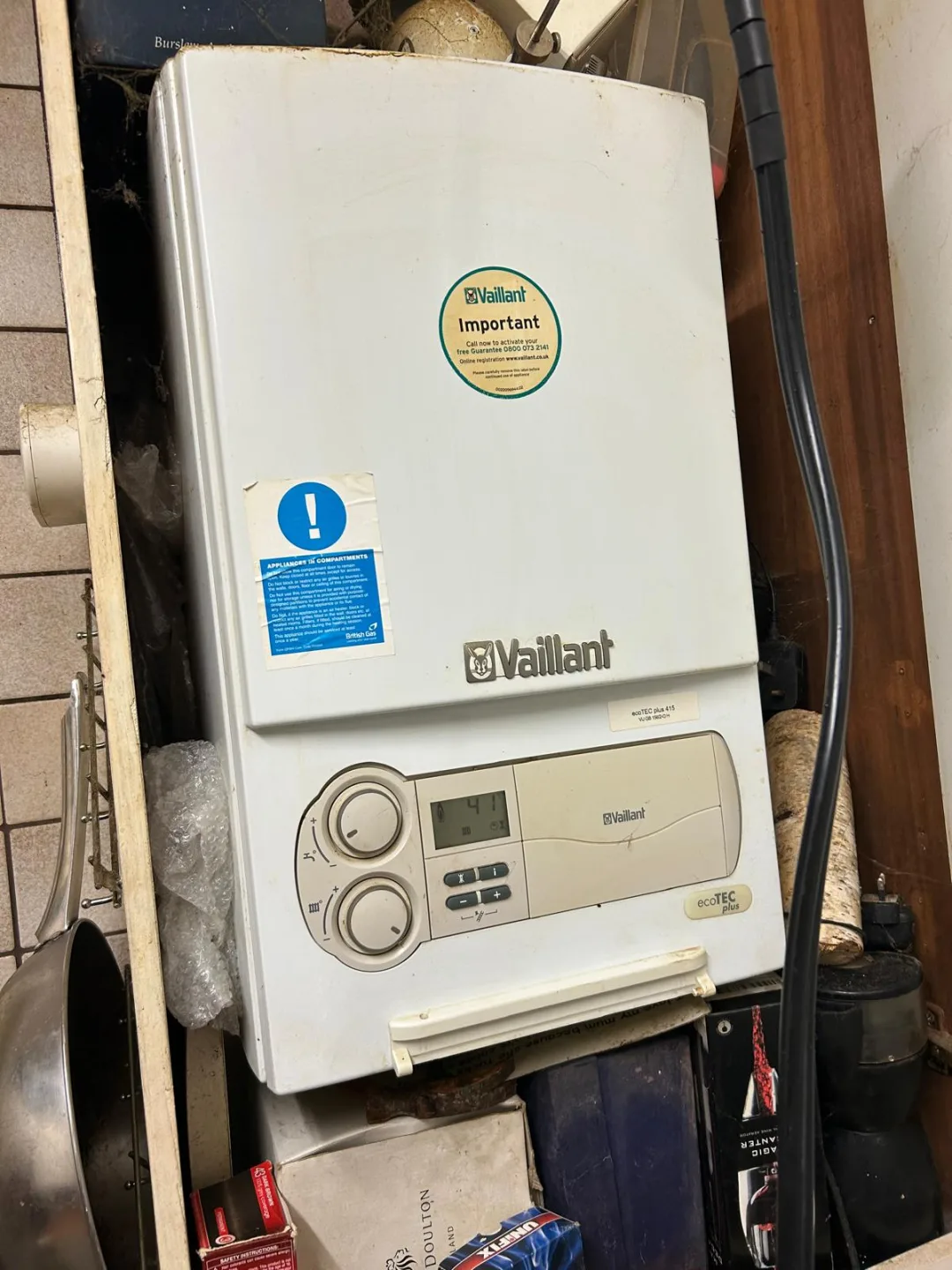
A boiler that has run for twelve or fifteen years without complaint can feel like it has earned a rest from servicing. The opposite is true. Wear builds up quietly inside the case, and an older boiler is exactly where it tends to cause problems.
Should you still service an old boiler?
Yes. Servicing is first a safety check: the engineer confirms the boiler is burning gas cleanly, that seals are intact and that flue gases are leaving the building. Those risks increase with age, so skipping the service on an older boiler removes the check at the point it matters most.
It is also the cheapest way to find out how much life the boiler has left. A service gives you readings and a visual inspection, rather than a guess based on the date it was fitted. Our existing article on how servicing extends the life of your heating covers the general benefits; this one is about what changes as the boiler ages.
What do older boilers typically need at a service?
Older boilers need the same checks as any other, plus closer attention to parts that wear with heat and time. The most common findings on older appliances are perished seals, a dirty heat exchanger, worn ignition and flame sensing electrodes, and a condensate trap that has collected debris.
- Seals and gaskets: the case seal and burner door seal harden over years of heating and cooling. A failed seal can let combustion products escape into the boiler case, so replacing them is a safety job, not an optional extra.
- Heat exchanger: deposits build up on the flue side, restricting gas flow and affecting combustion. Cleaning restores clean burning.
- Electrodes: worn electrodes lead to slow or failed ignition and lockouts.
- Condensate trap and pipe: on condensing boilers these can clog, which can shut the boiler down.
- Flue joints: older flue sections and seals are checked for condition and security.
Because of this, an older boiler often benefits from more than a basic service. Many manufacturers suggest an intermediate service roughly every three years once a boiler is over three years old, and a full strip-down every five to eight years depending on the model and guidance.
Which type of service suits an older boiler?
A standard annual service is the minimum. If the boiler has not had a deeper clean for several years, or the readings at the last service were marginal, an intermediate or full strip-down service is usually the better value.
| Service | Price inc VAT | When it suits an older boiler |
|---|---|---|
| Standard service | £90 | Every year, where readings are good and the history is clean |
| Intermediate service | £124.99 | Around every three years for boilers over three years old |
| Full strip-down service | £225 | Every five to eight years, or where readings suggest heavy deposits |
Our boiler service cost guide breaks down what each option includes.
Can you still get parts for an old boiler?
Often, but not always. Popular models from major manufacturers usually have parts available for many years, sometimes from the original maker and sometimes as compatible replacements. Less common or discontinued models can be much harder, with some components no longer made at all.
This is why the parts question often decides a boiler's future more than its age. A fifteen-year-old boiler with a good parts supply can be worth repairing, while a ten-year-old one from a range that has been discontinued may not be. Your engineer can tell you whether parts for your model are still readily available before a fault happens.
When do repeated faults point to replacement?
When the same boiler needs repairs more than once a year, when a single repair costs a large share of a new boiler, or when parts are becoming hard to source, it is time to plan a replacement. Doing that on your terms, in spring or summer, is far better than being forced into it in January.
Use this as an honest starting point:
| Age | Condition at service | Fault history | Usual advice |
|---|---|---|---|
| Under 10 years | Good readings | Occasional minor faults | Keep servicing and repairing |
| 10 to 15 years | Good readings | Few faults, parts available | Keep servicing, consider a deeper service |
| 10 to 15 years | Marginal readings or corrosion | Several repairs recently | Get a replacement quote and compare |
| Over 15 years | Any | Parts hard to source | Plan a replacement before winter |
| Any age | Classed as unsafe, costly fix | Any | Compare repair cost against replacement |
For a deeper look at the numbers, see our guide to repairing or replacing a Potteries-era boiler.
Very old boilers, especially those with open flues or back boilers behind gas fires, need careful checking because they draw air from the room they are in. Make sure the room has a working carbon monoxide alarm, keep air vents clear, and never remove the boiler casing yourself.
Is an old non-condensing boiler still safe to use?
A non-condensing boiler is not unsafe simply because of its design. Since 2005, new gas boilers in England and Wales have generally had to be condensing, but older non-condensing boilers can stay in use as long as they pass their checks and are maintained. They are simply less efficient than modern condensing models, and the Energy Saving Trust has independent guidance on what upgrading can mean for running costs.
Servicing an older boiler in Stoke-on-Trent
If your boiler is getting on, book an annual boiler service in Stoke-on-Trent and ask the engineer for a straight answer on its condition and parts supply. If it is time to move on, a free boiler quote costs nothing and we can do the survey remotely by video. We also cover boiler service in Cheadle and the Moorlands villages.
Call 07896 677083 to arrange a visit.
Frequently asked questions
How long does a gas boiler usually last?
Many boilers last well over ten years with regular servicing, and some run much longer. Build quality, water conditions, how well the system has been maintained and whether parts remain available all play a part. Hard water areas can shorten the life of combi hot water components if limescale is not managed.
Will a service make my old boiler more efficient?
A service can restore efficiency lost to dirty components or poor combustion settings, because clean burning uses gas better. It cannot turn a non-condensing boiler into a condensing one. If efficiency is your main concern, a replacement is the only way to get modern performance.
Can an engineer refuse to service a very old boiler?
An engineer may decline if there is no safe way to access the appliance or if critical parts cannot be obtained. More often, they will carry out the service and record any concerns. If a part fails and cannot be replaced, the boiler may have to stay off until it is replaced.
Is a back boiler worth servicing?
Yes, while it is in use. Back boilers and the gas fires in front of them should be checked every year. Because they are old designs with open flues, they need careful checks of the flue, ventilation and combustion. Many owners use the service result to plan a replacement.
Sources and further reading

Gasmaster Plumbing & Heating has served Stoke-on-Trent since 2005. Every article is written by our Gas Safe registered engineers (reg. 220932) from day to day work on boilers, heating and gas appliances across Staffordshire, Cheshire and Derbyshire.