On this page
- Why flood water makes gas appliances unsafe
- Flooded gas meter: what to do
- What to do before using gas appliances after a flood
- Boiler after flooding: repair or replace?
- Drying out safely: carbon monoxide and other risks
- Who to call after a flood
- Get your gas appliances checked after flooding
- Frequently asked questions
Key takeaways
- GOV.UK advises turning off gas, electricity and water during a flood if it is safe to do so, and not turning them back on until a qualified engineer or your utility company confirms they are safe.
- Any boiler, gas fire, cooker, water heater or meter that flood water reached must be inspected by a Gas Safe registered engineer before use.
- Damage is often hidden: corroded electrical connections, silt in burners and gas valves, and blocked flues or air vents.
- If you smell gas, leave the property and call the National Gas Emergency Service on 0800 111 999.
- Never dry out a flooded home with portable gas heaters, barbecues or generators indoors. They can cause fatal carbon monoxide poisoning.
After a flood, do not use any gas appliance that has been in contact with flood water until a Gas Safe registered engineer has checked it. Water and silt can damage a boiler’s electronics, gas valve, fan and burner, block flues and air supplies, and affect the gas meter and regulator, and any of these can make an appliance unsafe even after it looks dry. Government flood guidance is clear: do not turn your gas, electricity or water back on until your utility company or a qualified engineer has confirmed they are safe.
This guide explains which gas appliances are at risk, what to do when you get back into the property, what the engineer will check, and how to stay safe while the house dries out.
Why flood water makes gas appliances unsafe
Modern gas appliances depend on electrical controls and precise gas and air paths to burn safely. Flood water, which often carries mud, sewage and debris, can affect almost every part of them.
| Appliance or part | How flood water can affect it | Possible risk |
|---|---|---|
| Boiler printed circuit board (PCB) and wiring | Short circuits and corrosion, sometimes appearing weeks later | Electrical faults, controls behaving unpredictably |
| Gas valve and burner | Silt and corrosion in gas and air passages | Poor combustion, ignition problems |
| Fan and air pressure sensing | Water damage to motor and switches | Incorrect air supply, lockouts |
| Flue and air vents | Blocked by debris or damaged by water pressure | Combustion products not cleared safely |
| Gas meter and regulator | Water in the regulator vent or around the meter | Incorrect gas pressure to appliances |
| Floor-standing boilers, back boilers and gas fires | Often low enough to be fully submerged | Extensive damage to burners and controls |
| Gas cookers and hobs | Water in burners, ignition and flame safety devices | Poor flames, failure of safety devices |
Not all of this is visible. An appliance that powers up and lights may still have damage that affects how it burns. That is why the check needs to be done by an engineer with the right equipment, not judged by eye.
Flooded gas meter: what to do
The gas meter and the regulator next to it are usually the property of your gas supplier or meter operator, and the emergency control valve (the handle on the pipe by the meter) is where you turn off the supply to your home.
- If it is safe to reach without wading through deep or fast water, turn the emergency control valve off. The handle is off when it is at right angles to the pipe.
- If the meter has been under water, contact your gas supplier and tell them, as the meter or regulator may need checking or replacing.
- If you smell gas at any point, do not operate switches, open windows and doors, leave the property and call 0800 111 999.
Our guide to the emergency gas shut-off valve shows where to find it and how it works.
What to do before using gas appliances after a flood
- Make sure it is safe to go back in. GOV.UK’s after-a-flood guidance says to check with the emergency services that it is safe to return.
- Keep the supplies off. Do not turn gas, electricity or water back on until your utility company or a qualified engineer has confirmed they are safe.
- Photograph everything, including the flood water line on walls and appliances, before you start clearing up. Your insurer will want this.
- Do not try to dry, clean or test gas appliances yourself. Do not remove covers or use a hairdryer or heater on controls.
- Get an electrician to check the electrics before power is restored to circuits that were under water, including the boiler’s supply.
- Book a Gas Safe registered engineer to inspect every gas appliance and the installation pipework before the gas is used.
- Contact your insurer early and ask what you can move or throw away.
What the Gas Safe engineer will check
- Visual inspection of each appliance for the flood water line, silt, corrosion and damage.
- Electrical safety of the boiler controls once the circuit has been confirmed safe.
- Condition of burners, gas valves, fans and ignition parts.
- Flues, air vents and terminals for blockages or damage.
- A gas tightness test on the installation pipework. Our article on the gas tightness test explains what it involves.
- Gas pressures at the meter and appliances, and combustion checks once appliances can safely be run.
The engineer will tell you whether each appliance can be cleaned and returned to service, needs parts replacing, or should be condemned and replaced. Where an appliance is unsafe, they may disconnect it and issue a warning notice. Our guide to gas warning notices explains what At Risk and Immediately Dangerous mean.
Boiler after flooding: repair or replace?
It depends on how high the water reached, how long it stood, what was in it, and the age and type of the boiler.
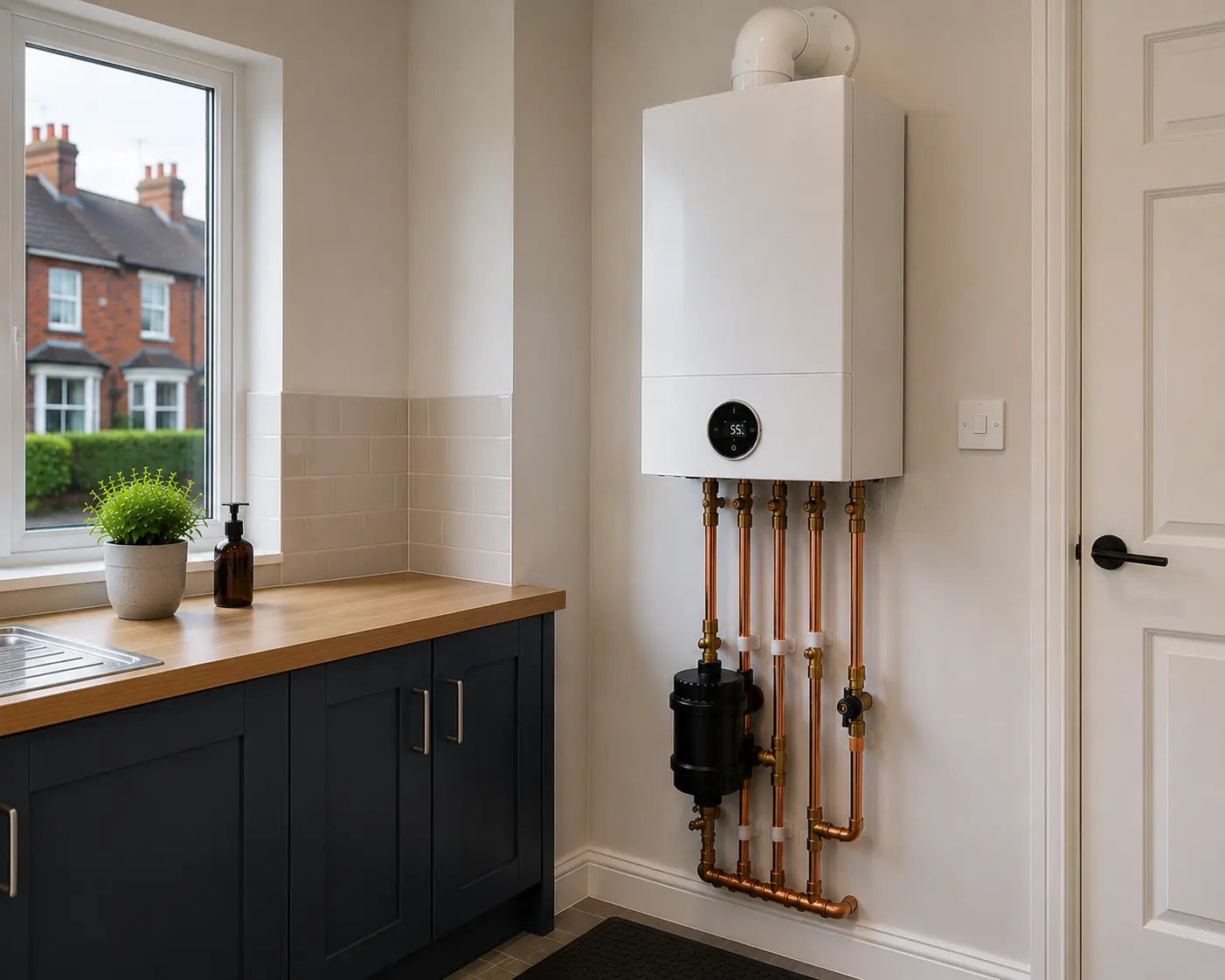
- Wall-hung boiler above the water line: may only need checking, especially if the flue, condensate pipe and electrical supply were unaffected.
- Water reached the bottom of the boiler: controls, pump and wiring connections may be affected. Parts may need replacing.
- Boiler fully or largely submerged: extensive damage is likely, and replacement is often the safer option.
- Floor-standing or back boilers: these sit low and are often badly affected.
A boiler can also be damaged indirectly, for example by a flooded condensate drain backing up or by water in the heating system. Our article on water leaking from a boiler covers internal leaks, which can look similar once a property starts drying.
Drying out safely: carbon monoxide and other risks
Flooded homes are often cold, damp and without heating for weeks. That makes people reach for temporary heat and drying equipment, which is where serious risks appear.
- Never use portable gas heaters, patio heaters, barbecues or camping stoves indoors to dry or heat a property.
- Never run a petrol or diesel generator inside the house or garage, or near windows and doors.
- Use electric dehumidifiers and heaters only once the electrics have been checked and declared safe.
- Fit or test a carbon monoxide alarm before any gas appliance is used again.
- Ventilate by opening windows when it is safe, to help drying.
If you or anyone in the home has headaches, dizziness, nausea or breathlessness, get into fresh air, call 0800 111 999 if you suspect a gas appliance, and seek medical help.
Who to call after a flood
| Situation | Who to contact |
|---|---|
| Smell of gas or suspected carbon monoxide | National Gas Emergency Service, 0800 111 999 |
| Danger to life from flood water | 999 |
| Power cut or electrical hazard | Your local electricity network, or 105 (free) |
| Flood warnings and advice | Floodline, 0345 988 1188 (24 hours) |
| Flooded gas meter | Your gas supplier |
| Checking gas appliances and pipework | A Gas Safe registered engineer |
| Checking electrics | A registered electrician |
| Claims and clear-up | Your insurer |
The Floodline, 999 and 105 advice comes from GOV.UK’s guidance on what to do during a flood, which also says to contact the gas emergency service for a gas leak.
Get your gas appliances checked after flooding
If your home has been affected by flooding, our Gas Safe registered engineers can inspect your boiler, gas fire, cooker and pipework, carry out a gas tightness test, and give you a written report for your insurer. We cover Stoke-on-Trent, Newcastle-under-Lyme, Stafford, Burton and the surrounding area. For urgent help see our emergency boiler repair service, read our advice on what to do if you smell gas, or contact Gasmaster to book an inspection.
[googlesitekit-end-of-content]
Frequently asked questions
Can I use my boiler after a flood if it seems to work?
No. If flood water reached the boiler, its controls, flue or the gas meter, have it inspected by a Gas Safe registered engineer before using it, even if it lights normally. Water and silt can damage electrical parts, gas valves and burners in ways that are not obvious and may only cause problems later.
Who pays for checking gas appliances after a flood?
Buildings insurance usually covers flood damage to fixed appliances such as boilers and gas fires, and the inspection needed to assess that damage, subject to your policy terms. Contact your insurer early, keep photos and engineer reports, and ask whether they want to use their own contractors or accept your engineer’s findings.
My gas meter was under water. Is it safe?
Do not assume so. Turn the emergency control valve off if you can reach it safely and contact your gas supplier, because the meter and regulator may need checking or replacing. If you smell gas, leave the property and call 0800 111 999. Do not try to dry or adjust the meter yourself.
How long after a flood can I use gas appliances?
There is no fixed time. Appliances can only be used once a Gas Safe engineer has inspected them, the electrics have been confirmed safe, and any damaged parts have been replaced. Depending on the damage and parts availability, this could take days or longer, so plan for temporary electric heating once the electrics are signed off.
Should I turn the gas off if my home is about to flood?
GOV.UK advises turning off your gas, electricity and water supplies during a flood if it is safe to do so. Use the emergency control valve by the meter. Do not wade through deep or fast water to reach it, and never touch electrical switches while standing in water.
Related services

Abdul runs Gasmaster Plumbing & Heating and has worked on boilers, heating and gas appliances across Stoke-on-Trent since 2005. He is Gas Safe registered (reg. 220932), and these articles come from his day to day work in homes and businesses across Staffordshire, Cheshire and Derbyshire.