On this page
- Is a combi boiler service different from a system boiler service?
- What is checked on every gas boiler?
- What extra is checked on a combi boiler?
- What extra is checked on a system or regular boiler?
- How do combi and system boiler services compare?
- Does an unvented cylinder need its own service?
- Booking a combi or system boiler service in Stoke-on-Trent
- Frequently asked questions
Quick answer
Every gas boiler service covers the same core: flue, gas pressure, combustion analysis, safety devices, condensate trap and seals. A combi service adds hot water checks, including the plate heat exchanger, diverter valve and flow sensor. System and regular boiler services add the parts outside the boiler, such as the hot water cylinder, motorised valves, pump and expansion vessel.
Key takeaways
- The combustion and safety core of a service is the same for every gas boiler.
- Combis need hot water side checks, with limescale a particular issue in Stoke-on-Trent.
- System and regular boilers have more of the system outside the boiler casing.
- An unvented cylinder needs its own check by a suitably qualified engineer.
- Tell your engineer what type of system you have when booking.
A boiler is only one part of a heating system, and what surrounds it depends on the type you have. A combi does almost everything inside one case. A system or regular boiler relies on a cylinder, valves and sometimes tanks in the loft. That difference shapes what a thorough service should cover.
Is a combi boiler service different from a system boiler service?
The core is the same, but the extras differ. Both need the flue, gas pressure, combustion, safety devices, condensate trap and seals checked. A combi service then focuses on the hot water parts inside the boiler, while a system or regular boiler service looks further out at the cylinder, valves and pump that make up the rest of the system.
The price of a standard service is normally the same for either type. What changes is where the engineer spends time and which faults they are looking out for.
What is checked on every gas boiler?
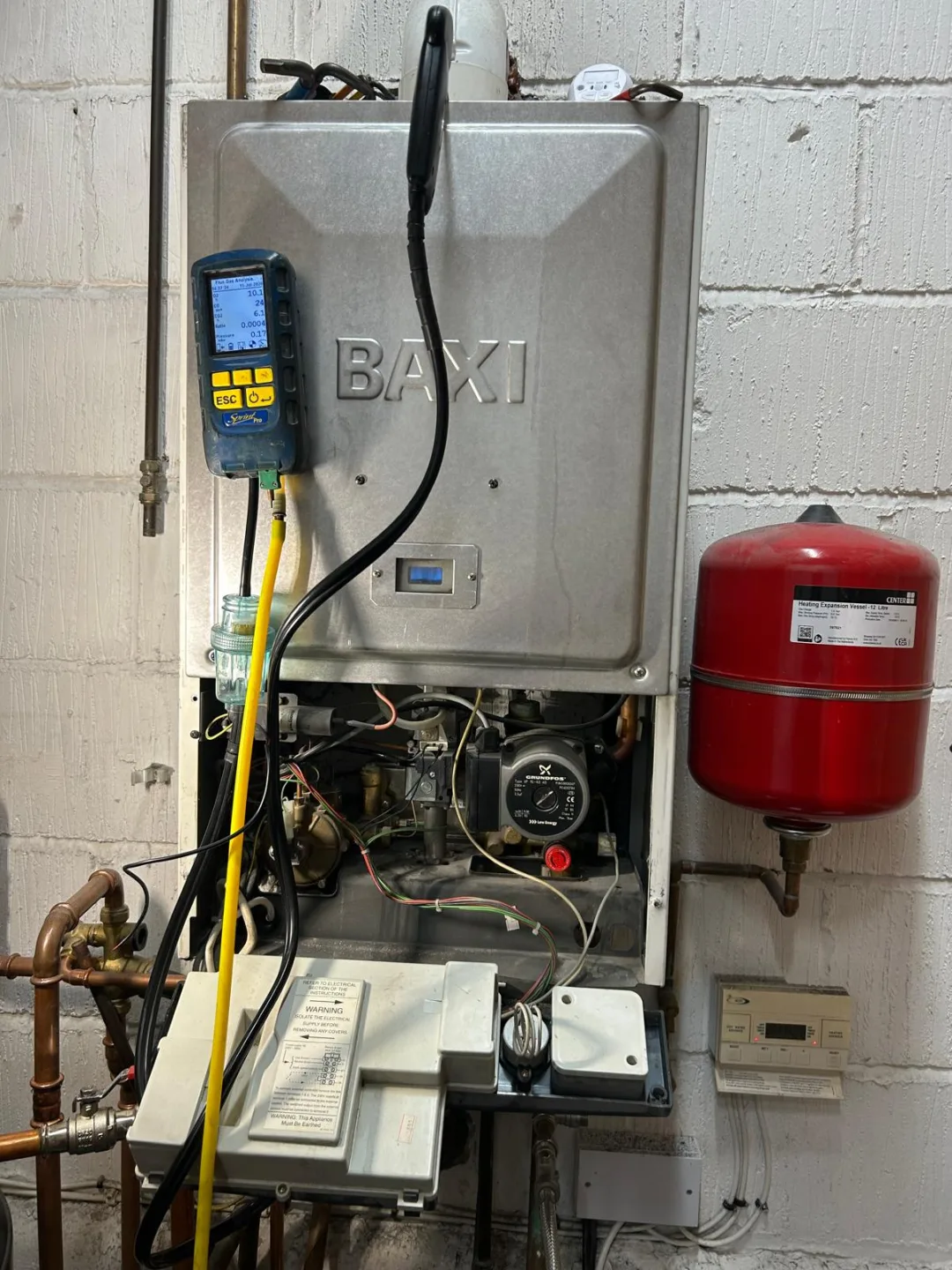
Every gas boiler, whatever its type, needs the checks that confirm it is burning safely and efficiently. These are the non-negotiable part of the service, and they are the same whether the boiler heats water on demand or feeds a cylinder.
- boiler condition, mounting, pipework and flue route to the terminal
- gas inlet and working pressure
- flue gas analysis to confirm safe, efficient combustion
- ignition, flame sensing and safety shut-off operation
- condensate trap and pipe
- case and combustion chamber seals
- system pressure and the heating controls
We cover each of these in more depth in our boiler service checklist.
What extra is checked on a combi boiler?
A combi heats mains water instantly as it passes through a plate heat exchanger, so the engineer checks the hot water side too. That includes running a hot tap to confirm the boiler switches to hot water promptly, reaches temperature and holds it at a steady flow, and checking the diverter valve and flow sensor that control the switch.
In Stoke-on-Trent's hard water, limescale is the thing to watch. It builds up in the plate heat exchanger and around the flow sensor, causing hot water that fluctuates, runs cooler than it should or takes longer to arrive. Scale also makes the boiler work harder. Signs of it are worth mentioning when you book, and our post on hard water and boiler repair explains more.
The combi's pump and expansion vessel are inside the case as well. The pressure gauge behaviour gives the engineer a clue about the vessel; checking its charge properly means depressurising the heating side, so it is often done on an intermediate service or when pressure is dropping.
What extra is checked on a system or regular boiler?
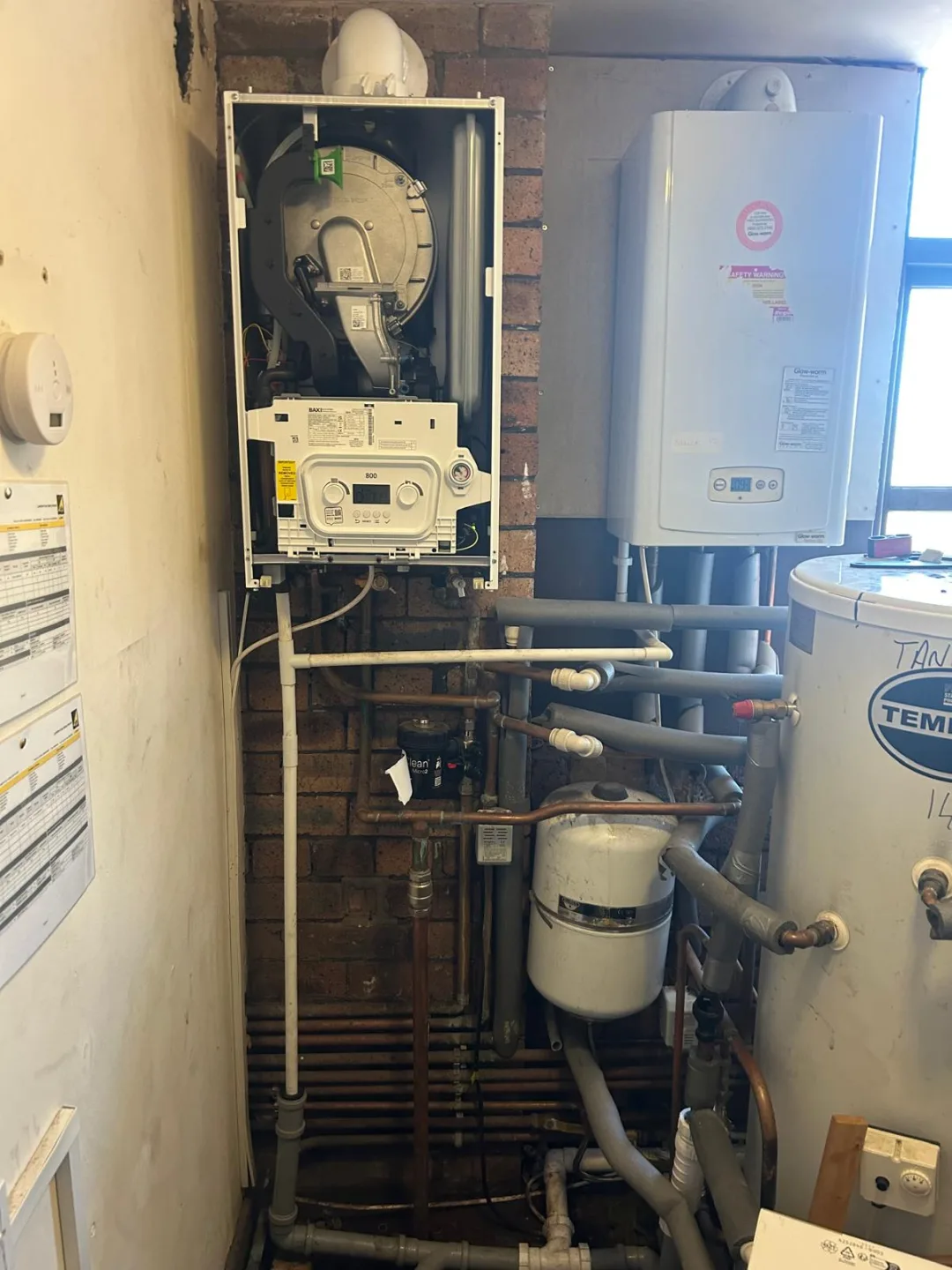
With a system or regular boiler, more of the working parts sit outside the boiler. The engineer should check that the motorised valves open and close properly between heating and hot water, that the cylinder thermostat is calling for heat and switching off, and that the pump is running correctly.
A system boiler has its pump and expansion vessel built in, like a combi. A regular, or heat-only, boiler usually has an external pump and is fed from a small feed and expansion tank in the loft, with a separate cold water storage tank for the cylinder. Those tanks and their float valves are worth checking for condition, especially in older lofts.
How do combi and system boiler services compare?
The table below sets out where the checks overlap and where they differ.
| Area | Combi boiler | System or regular boiler |
|---|---|---|
| Combustion, flue and gas pressure | Yes | Yes |
| Hot water production | Plate heat exchanger, diverter valve, flow sensor | Cylinder coil, cylinder thermostat, motorised valves |
| Pump and expansion vessel | Inside the boiler | Inside on a system boiler; often external on a regular boiler |
| Loft tanks | None | Feed and expansion and cold water tanks on regular systems |
| Limescale risk | High on the hot water side in hard water areas | Mainly in the cylinder and immersion heater |
| Separate cylinder check | Not needed | Recommended for unvented cylinders |
Does an unvented cylinder need its own service?
Yes. An unvented hot water cylinder stores mains-pressure hot water and has its own safety devices, including a temperature and pressure relief valve and an expansion vessel or air gap. Manufacturers generally recommend these are checked every year by an engineer qualified to work on unvented systems.
This check is separate from the gas boiler service, even though both can often be done on one visit. Gas Safe registration covers the gas work only; you can see which gas categories an engineer holds on the Gas Safe Register, and ask separately about their unvented qualification. If you have a sealed cylinder with no tank in the loft, tell us when you book so the right checks are planned. Any water dripping from the small pipe near the cylinder, called the discharge pipe or tundish, should be reported straight away rather than left.
Booking a combi or system boiler service in Stoke-on-Trent
Our annual boiler service in Stoke-on-Trent covers combi, system and regular boilers, and we tailor the extra checks to your setup. With spring underway, it is a good time to book before the summer holidays fill diaries.
We also cover the rural west of the county, including boiler service in Eccleshall and boiler service in Penkridge. Call 07896 677083 and tell us which type of boiler you have.
Frequently asked questions
Is a combi boiler cheaper to service than a system boiler?
The standard service price is usually the same for either type. The difference is in what the engineer checks beyond the core safety and combustion tests. An unvented cylinder check or work on other system components is separate, so mention your setup when you book to get an accurate price for the whole visit.
Why is my combi hot water hot then cold?
Fluctuating hot water on a combi is often linked to limescale in the plate heat exchanger or flow sensor, a sticking diverter valve, or low water flow into the property. It can also happen if two taps run at once. Mention it when booking so the engineer can investigate during the service.
Do I need to drain my loft tanks as part of a service?
No. Loft tanks on a regular system are inspected, not drained, during a normal boiler service. The engineer looks for damage, a missing lid, debris or a float valve that is not working. If the tank itself is in poor condition, they will advise on repair or replacement separately.
Sources and further reading

Gasmaster Plumbing & Heating has served Stoke-on-Trent since 2005. Every article is written by our Gas Safe registered engineers (reg. 220932) from day to day work on boilers, heating and gas appliances across Staffordshire, Cheshire and Derbyshire.