On this page
Quick answer
The cheapest ways to keep a house warmer are those that stop heat escaping or get more from the heat you already pay for. Draught-proof doors, windows, letterboxes and floorboards; close curtains at dusk; keep furniture away from radiators; top up loft insulation where it is thin; use timers, a room thermostat and TRVs properly; bleed radiators; and make sure the boiler is serviced and running at a sensible flow temperature. None of these needs a big budget, and most can be done in a weekend.
Key takeaways
- Draught proofing is one of the cheapest and most effective measures.
- Heavy curtains closed at dusk reduce heat loss through windows.
- Furniture and long curtains in front of radiators trap heat.
- Heating controls used well save more than most gadgets.
- A serviced, correctly set boiler makes every kWh count.
Stop the draughts
Gaps around doors, windows, letterboxes, keyholes, loft hatches and floorboards let warm air out and cold air in. Self-adhesive seals, brush strips and letterbox flaps are inexpensive. Do not block intentional ventilation such as trickle vents, air bricks or vents serving gas appliances, which are needed for safety and to control condensation.
Curtains and blinds
Close curtains at dusk to reduce heat loss through glass. Tuck them behind radiators on windowsills rather than letting them hang in front, which channels heat towards the window.
Radiators
- Keep sofas and furniture away so heat can circulate.
- Bleed radiators if they are cold at the top.
- Radiator reflector panels behind radiators on external walls can reduce heat lost into the wall.
- Clean dust from convector fins.
Loft and hot water
Check loft insulation depth. Thin or compressed insulation lets heat escape through the roof. Insulate the hot water cylinder and pipes if you have one. Grants may be available; check the Warm Homes Plan and energy efficiency grant pages on GOV.UK.
Controls
- Use a timer so heat is on when you need it.
- Set the thermostat to a comfortable level, not a high one. See turning the thermostat down one degree.
- Set TRVs lower in rooms you use less. See thermostat and TRV settings.
The boiler
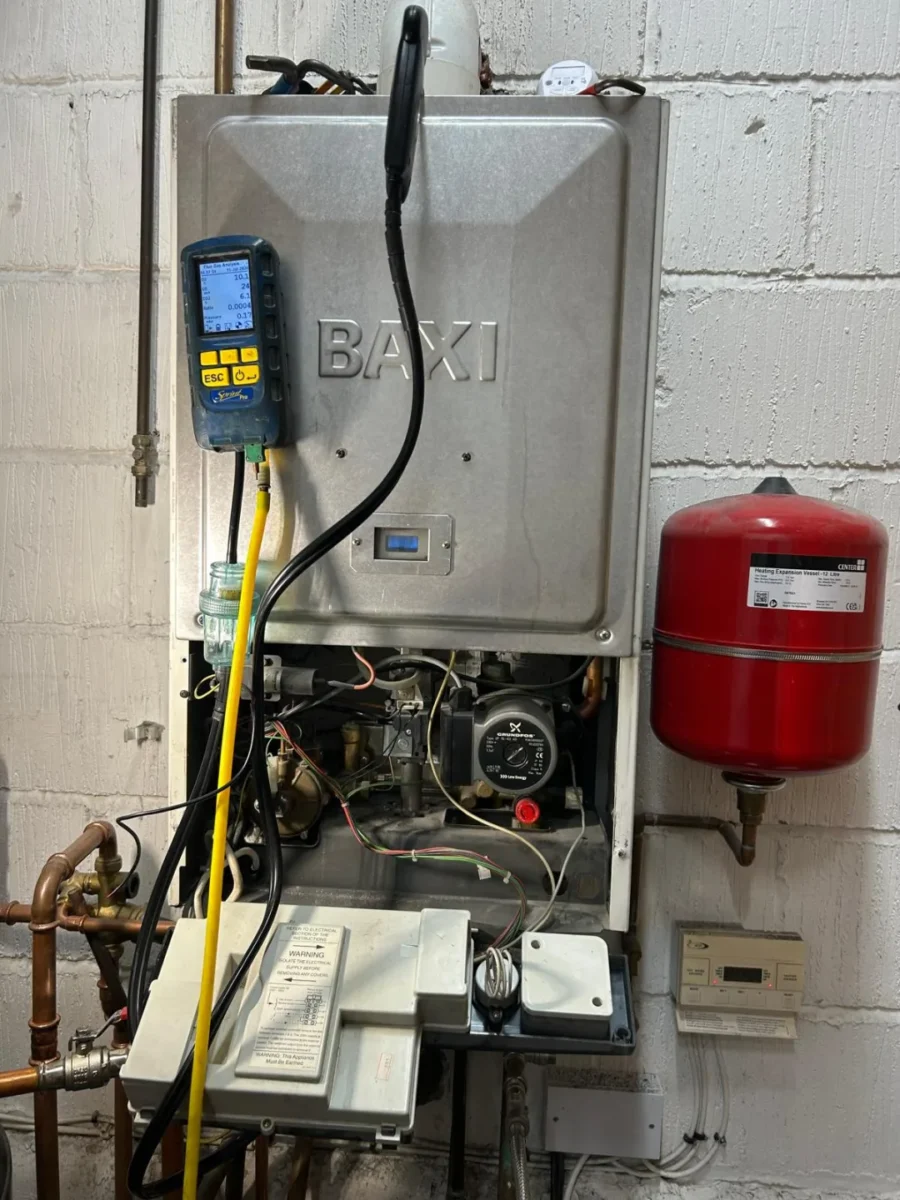
A service keeps the boiler burning efficiently and safely. Lowering flow temperature where appropriate helps condensing boilers work at their best. See boiler flow temperature settings.
Keep yourself warm too
Warm layers, a hot drink and staying active help. For older or vulnerable people, keeping rooms at 18°C or more matters. See what temperature your home should be in winter.
Book with Gasmaster
Want your boiler running at its best this winter? Gasmaster Plumbing & Heating, Gas Safe registered (220932), services boilers across Stoke-on-Trent, Newcastle-under-Lyme and Biddulph. Book an annual boiler service.
[googlesitekit-end-of-content]
Frequently asked questions
Do radiator reflectors work?
They can reduce heat lost into external walls, especially uninsulated solid walls. The effect varies.
Is it cheaper to heat one room?
Heating only rooms in use saves energy. Use TRVs to turn down unused rooms rather than turning the boiler on and off repeatedly.
Can blocking vents save money?
Do not block vents. They provide air for gas appliances and help control condensation.
Sources
- Energy Saving Trust, draught proofing and insulation guidance (energysavingtrust.org.uk)
- UK Health Security Agency, cold weather guidance (gov.uk)
- GOV.UK, Warm Homes Plan
Related services

Abdul runs Gasmaster Plumbing & Heating and has worked on boilers, heating and gas appliances across Stoke-on-Trent since 2005. He is Gas Safe registered (reg. 220932), and these articles come from his day to day work in homes and businesses across Staffordshire, Cheshire and Derbyshire.