On this page
- Why schools and nurseries carry extra responsibility
- What needs checking: heating systems and catering kitchens
- CP42 certification for school and nursery kitchens
- CP44 and one-off events: fairs, fetes and mobile catering
- Scheduling servicing without disrupting term time
- Record-keeping and what facilities managers should expect
- A real example from an education site
- Choosing a gas engineer for education settings
- Book with Gasmaster
- Frequently asked questions
Quick answer
Schools and nurseries carry extra legal and safeguarding weight around gas safety because of the number of children and staff on site every day. In practice that means annual gas safety checks on heating appliances, CP42 certification for any catering kitchen, servicing scheduled around term time, and clear, organised records that a facilities manager can produce for governors, insurers or Ofsted on request.
Key takeaways
- Education settings must keep gas appliances safe under HSE regulations, on top of the wider duty of care owed to children and staff.
- A working catering kitchen needs CP42 commercial catering gas certification, which is a different check to a standard boiler service.
- One-off events such as summer fairs or food stalls using hired catering equipment fall under CP44 rules, not CP42.
- Servicing should be scheduled out of hours or during holidays wherever possible, so lessons, meal times and nursery routines are not disrupted.
- Organised, retrievable records matter for Ofsted, governors and insurers, not just as paperwork for the engineer’s own files.
Gas safety in a school or nursery is not the same job as gas safety in a family home. There are more people on site, many of them very young, and a fault that would be an inconvenience in a house can become a safeguarding and operational problem in a school kitchen or plant room. Facilities managers and business managers are increasingly expected to understand what “compliant” actually looks like, not just take an engineer’s word for it.
Why schools and nurseries carry extra responsibility
Any building with gas appliances has to be kept safe under UK gas safety law, but education settings sit under closer scrutiny than most. Large numbers of children, some too young to recognise the smell of gas or the symptoms of carbon monoxide exposure, are on site for hours at a time. Governors, multi-academy trusts and nursery owners are responsible for demonstrating that gas appliances, from classroom heating to the school kitchen, are properly maintained and safely used.
This is separate from, but connected to, wider safeguarding duty. A facilities manager who cannot produce up-to-date gas safety records is not just risking a fine, they are leaving a gap in the site’s overall duty of care that governors and inspectors will ask about. Working with a Gas Safe registered gas engineer who understands education sites, rather than only domestic ones, makes this much easier to manage.
What needs checking: heating systems and catering kitchens
Most schools and nurseries have two distinct gas safety streams to manage. The first is the heating system: boilers, water heaters and any gas-fired classroom or hall heating, which needs an annual boiler service and, where the site includes any let or leased accommodation such as a caretaker’s flat, a landlord gas safety certificate for that space.
The second is the catering kitchen, if the site prepares food on site rather than bringing it in fully cooked. School and nursery kitchens often run commercial-grade equipment such as large ovens, fryers and gas hobs, and this equipment falls under commercial catering gas certification rather than a domestic-style check. Both streams need to be tracked, dated and renewed on schedule, ideally by the same trusted contractor so nothing slips between two different suppliers.
CP42 certification for school and nursery kitchens
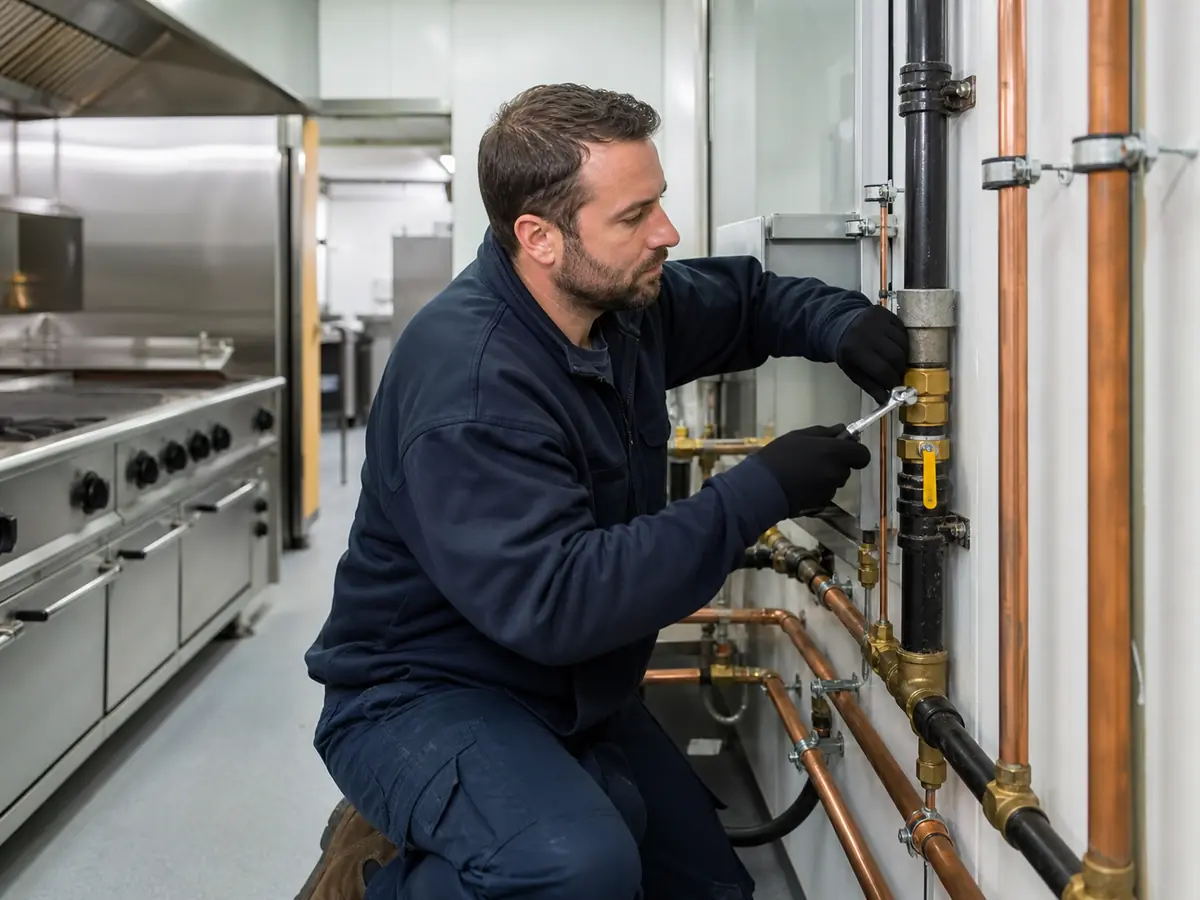
Any commercial kitchen using gas catering equipment, including a school or nursery kitchen, should be checked and certified under CP42, the industry standard covering gas safety in catering establishments. This covers appliance condition, ventilation, gas interlock systems where fitted, and safe isolation in an emergency. It is a more detailed inspection than a domestic boiler service because commercial catering appliances see heavier daily use and carry a higher risk if something is neglected.
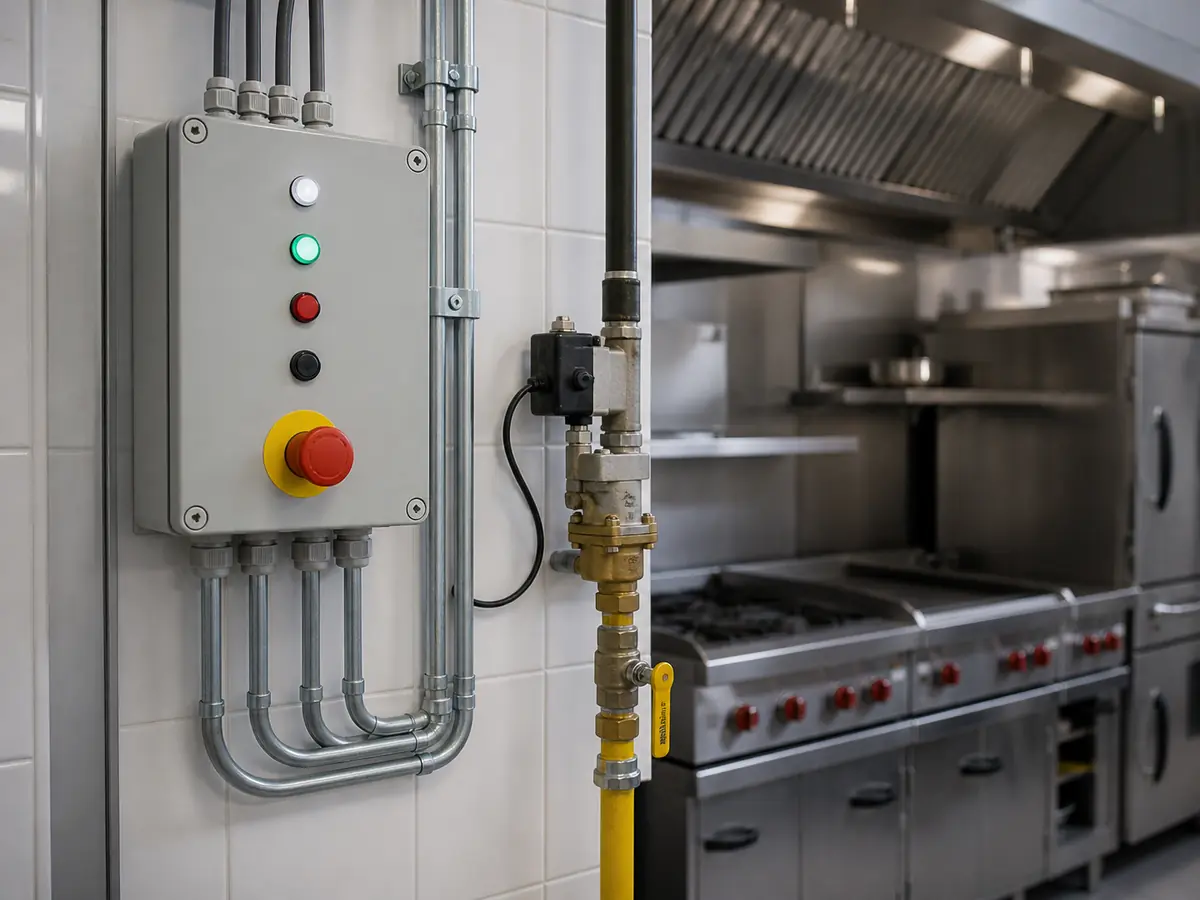
Gasmaster provides CP42 commercial gas certification for school, nursery and catering kitchens across Stoke-on-Trent and the surrounding area, and many sites that use a gas interlock system in their kitchen will want this checked as part of the same visit, since an interlock fault can stop the kitchen operating safely until it is resolved.
CP44 and one-off events: fairs, fetes and mobile catering
Summer fairs, Christmas fetes and open days often bring in mobile catering units, whether that is a hired hog roast trailer, a coffee van, or a stall using portable gas burners. This equipment falls under CP44, the standard for mobile and temporary catering installations, which is separate from the CP42 certification covering the school’s own fixed kitchen.
It is worth checking, before any event with gas-fired catering equipment on site, that the operator holds current CP44 documentation for their own appliances. The school’s responsibility is generally to make sure only compliant equipment and competent operators are allowed on site, and to keep a record that this check was made, even where the school is not directly responsible for certifying someone else’s van or trailer.
Scheduling servicing without disrupting term time
One of the biggest practical frustrations for facilities managers is fitting statutory gas checks around a full timetable. A kitchen that stops for a CP42 inspection mid-service disrupts lunch for the whole school. A boiler that goes offline for maintenance on a cold January morning is a genuine problem for young children in a nursery setting.
The answer is scheduling servicing during holidays, inset days or after the site has closed for the day, and agreeing this well in advance with a contractor who is used to working around school hours rather than treating every job as a standard nine-to-five domestic call-out. Booking central heating checks and kitchen certification together, in a single planned visit during a half-term break, is usually the most efficient way to keep everything current without touching term-time operations at all.
Record-keeping and what facilities managers should expect
Every gas safety check should leave the school or nursery with a dated certificate: a CP42 certificate for the catering kitchen, a landlord gas safety certificate for any let accommodation, and a Benchmark or service record for the heating system. These should be filed together, with renewal dates clearly flagged, so a governor, trust representative or Ofsted inspector asking “when was this last checked” gets an answer in minutes rather than a search through old emails.
A reliable commercial gas engineer will usually offer to keep a copy of the certificate history on file and flag upcoming renewal dates ahead of time, which takes the administrative burden off a busy facilities team that is already juggling far more than plant maintenance.
A real example from an education site
The value of a responsive, Gas Safe registered contractor becomes obvious the moment something goes wrong mid-term. One facilities manager at Holmes Chapel High School described exactly this kind of situation:
“I run the Estates & Facilities at Holmes Chapel High School. I called Gasmaster Plumbing & Heating from Stoke on Trent, for an emergency call out, due to no gas getting to our school restaurant causing issues to feed over 1,300 students. They came out to me very quickly, after trying to help on a video call, they identified the faults, it needed new parts, they did a temporary fix to get the restaurant working, so I had no disruption, and came back a few days later as soon as the parts came in. I was very impressed with the service, they kept me informed all the way, until the job was completed. I also use Gasmaster for my annual commercial gas safety service in the school restaurant. I would highly recommend Gasmaster if anyone was looking for this kind of work”
Carl Wagstaffe (CWa), Google review, Holmes Chapel
That combination, a fast emergency response to keep a large school feeding over a thousand students, followed by proper repair and ongoing annual certification, is the standard other schools and nurseries should be looking for from a contractor.
Choosing a gas engineer for education settings
Not every gas engineer is set up for school and nursery work. Look for a contractor who is properly Gas Safe registered, holds experience with commercial kitchens and CP42 certification specifically, understands the practical need to work around term time, and can offer a genuine emergency response if a heating or catering fault threatens to disrupt a school day. Gasmaster covers education and commercial sites across Stoke-on-Trent, Newcastle-under-Lyme, Stone and the wider Staffordshire and Cheshire area, and can set up a single annual schedule covering both the heating system and any catering kitchen on site.
Book with Gasmaster
If your school or nursery needs its annual gas safety check, CP42 kitchen certification, or a one-off fault sorting out before the next term starts, book online with Gasmaster. Gasmaster is Gas Safe registered (220932) and based in Stoke-on-Trent, covering education and commercial sites across Newcastle-under-Lyme, Stone, Crewe and the wider area, and can schedule work around your term dates so nothing disrupts the school day.
Frequently asked questions
Does a school kitchen need a different gas certificate to the school boiler?
Yes. The school’s heating system is covered by a standard boiler service, while any commercial catering kitchen on site needs CP42 certification, which is a separate, more detailed inspection of catering-specific gas appliances.
What is CP44 and does it apply to our school fair?
CP44 covers mobile and temporary catering installations, such as a hired hog roast trailer or coffee van. If outside caterers bring gas-fired equipment to a school event, the school should check they hold current CP44 documentation for their own appliances.
How often do school and nursery gas checks need to happen?
Heating appliances need an annual gas safety check as a minimum, and commercial catering equipment under CP42 is also typically checked annually, though a busy kitchen in heavy daily use may benefit from more frequent inspection.
Can servicing be done outside school hours?
Yes, and it usually should be. Most contractors experienced with education sites will schedule kitchen and heating checks during holidays, inset days or after the building closes, to avoid disrupting lessons or meal times.
Who is legally responsible for gas safety at a school or nursery?
Responsibility generally sits with the employer, which in practice means the governing body, academy trust or nursery owner/operator, working through a facilities or business manager who arranges and records the checks.
Sources
- Gas Safe Register (gassaferegister.co.uk)
- HSE, Health and Safety Executive (hse.gov.uk)
- Ofsted (ofsted.gov.uk)
- Department for Education (gov.uk)
Related services

Abdul runs Gasmaster Plumbing & Heating and has worked on boilers, heating and gas appliances across Stoke-on-Trent since 2005. He is Gas Safe registered (reg. 220932), and these articles come from his day to day work in homes and businesses across Staffordshire, Cheshire and Derbyshire.