On this page
- What a power flush actually is
- Signs your system needs a power flush
- How the power flushing process works
- How long it takes and how disruptive it is
- Cost factors, and why we won’t quote an exact price here
- Power flush vs magnetic filter: what’s the actual difference
- Why untreated sludge shortens boiler life and voids warranties
- Book with Gasmaster
- Frequently asked questions
Quick answer
A power flush forces high-flow water, often with a cleaning chemical, through your entire central heating system to clear built-up sludge, rust and debris from radiators and pipework. It’s typically needed when radiators are cold at the bottom, the pump is noisy, water runs black when bled, or the boiler cuts out, and left untreated this sludge shortens boiler life and can void warranties.
Key takeaways
- A power flush cleans the whole heating system, radiators and pipework included, not just the point closest to the boiler.
- Cold radiators at the bottom, black or discoloured water when bleeding, a noisy pump, and unexplained boiler cut-outs are the main warning signs.
- A power flush is different from fitting a magnetic filter: a filter catches ongoing debris continuously, a flush removes what’s already built up.
- The process typically takes half a day to a full day depending on system size, and costs vary with the number of radiators, so always get a specific quote.
- Manufacturers increasingly expect a clean system as a warranty condition, and sludge left untreated is a common cause of premature boiler and pump failure.
Black sludge inside a central heating system is one of the most common, and most preventable, causes of poor heating performance and early boiler failure in UK homes. A power flush is the standard fix once sludge has already built up, and knowing when you actually need one, rather than a simpler fix, saves both money and disruption.
What a power flush actually is
A power flush uses a specialist pump to circulate water at high velocity and, in the reverse direction to normal flow, through your entire central heating system: every radiator, all the connecting pipework, and the boiler’s heat exchanger. A cleaning chemical is typically added to help break down and lift accumulated sludge, rust particles and limescale debris from inside the pipework and radiators, which the flushing pump then carries out of the system and away, rather than just moving it from one radiator to another.
This distinguishes a power flush from a simple drain-and-refill, which empties the system but does very little to dislodge debris that’s settled and stuck inside radiators and narrow pipe runs. A power flush is specifically designed to physically dislodge and remove that build-up throughout the whole system, not just clear the water that’s currently sitting in it.
Signs your system needs a power flush
A handful of symptoms together are a strong indicator that sludge has built up enough to need a flush rather than a smaller fix. Radiators that are cold at the bottom but warm at the top are one of the clearest signs, since sludge is denser than water and settles at the lowest point inside the radiator, blocking flow there specifically; this is the reverse pattern to trapped air, which shows up as cold at the top instead. Water that runs black, brown or visibly dirty when you bleed a radiator is another strong indicator, since that discolouration is the sludge itself.
A noisy central heating pump, or a boiler making banging or kettling noises, often points to sludge and limescale restricting flow and causing localised overheating inside the heat exchanger. Some radiators heating far more slowly than others, or barely heating at all despite the system otherwise working, can mean sludge has settled unevenly around the system. And a boiler that cuts out or locks out on an overheat fault, particularly if this recurs, is frequently traced back to restricted flow from sludge rather than a fault with the boiler itself. If several of these are present together, a flush is worth investigating rather than treating each symptom in isolation.
How the power flushing process works
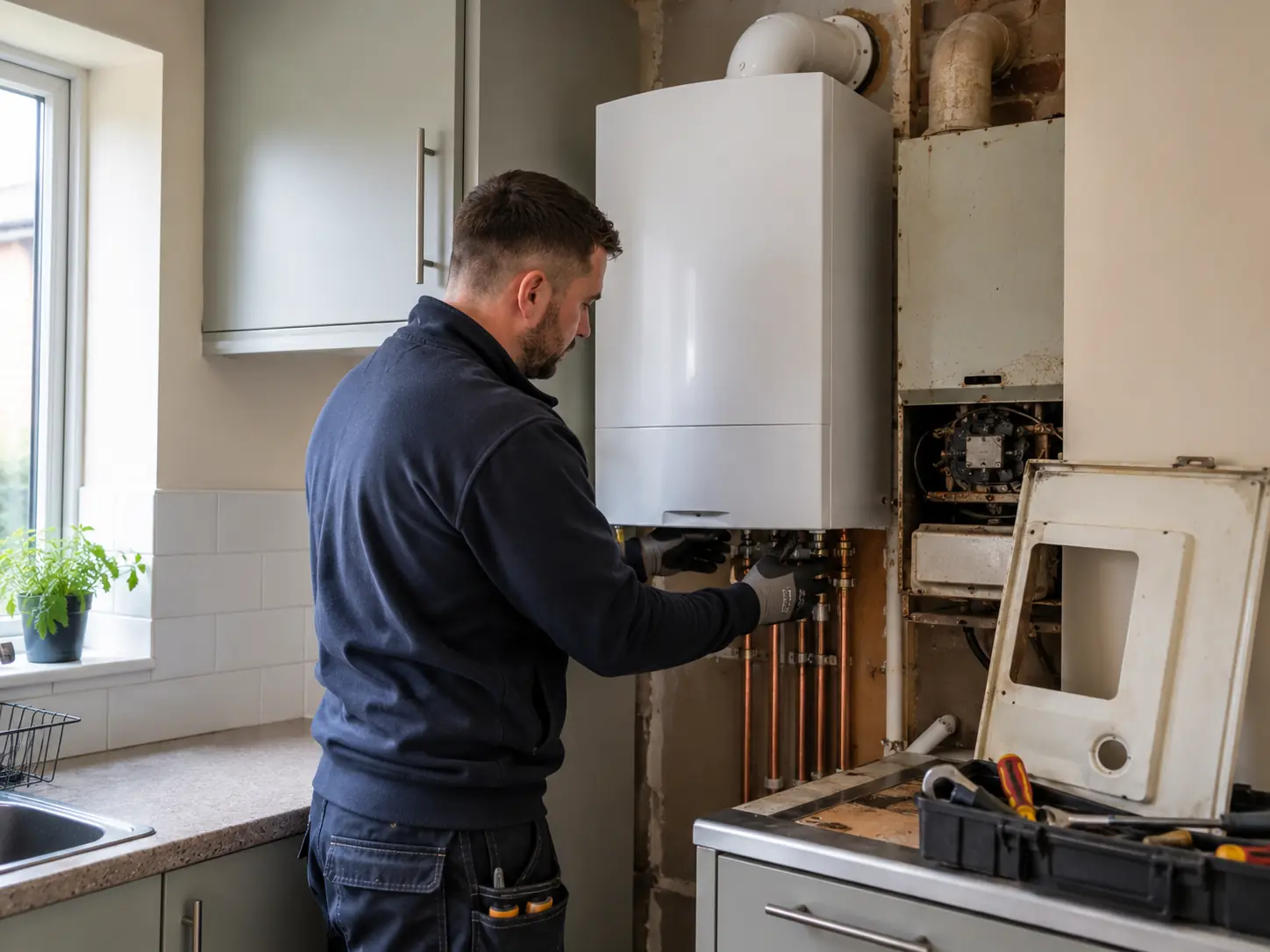
An engineer connects the flushing pump to the system, usually at the boiler or a convenient point in the pipework, and works through the system a section or radiator at a time, isolating and flushing each one in turn to concentrate flow and dislodge debris effectively rather than diluting it across the whole system at once. Cleaning chemicals are circulated and given time to work on stubborn deposits, sometimes with gentle agitation to individual radiators to help loosen settled sludge. The dirty water is continually flushed out and replaced with clean water until what comes out runs clear.
Once the system is clean, an inhibitor is added to the refilled system, a chemical that helps prevent corrosion and new sludge formation going forward, which is an important step; a flush without a subsequent inhibitor dose gives you a clean system that starts silting up again from day one.
How long it takes and how disruptive it is
For a typical UK home with 8 to 12 radiators, a power flush generally takes somewhere between half a day and a full day, depending on how badly sludged the system is and how many radiators need individual attention. It’s a wet, plumbing-focused job rather than a dusty, invasive one; expect an engineer working through each radiator in turn, some noise from the flushing pump, and the heating being unavailable while work is in progress, but it doesn’t generally involve lifting floors or major disruption to the property.
Cost factors, and why we won’t quote an exact price here
Power flush costs vary with the number of radiators, how badly sludged the system is, how accessible the radiators and pipework are, and regional labour rates. As a general UK guide, a power flush typically costs somewhere in the range of GBP300-600 for an average-sized home, though heavily sludged or larger systems can cost more. This is a genuine range reflecting the UK market, not a fixed Gasmaster price; the only way to get an accurate figure for your specific system is a proper assessment, so contact us directly for a quote based on your radiators and current heating problems.
Power flush vs magnetic filter: what’s the actual difference
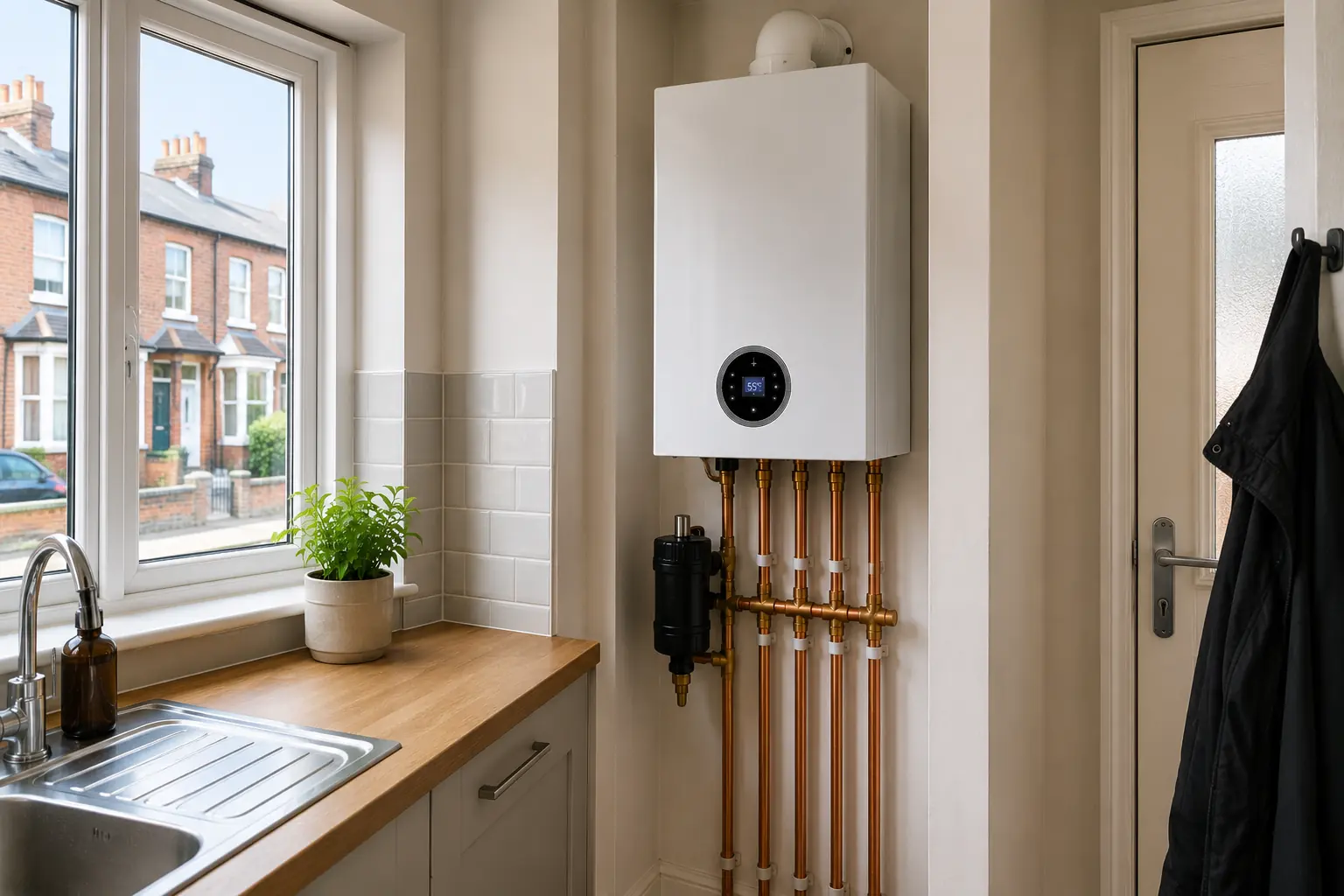
These two are often confused, but they solve different problems. A magnetic system filter is a device fitted permanently into the pipework, usually near the boiler, that continuously catches magnetic debris, mainly iron oxide sludge, as it circulates, trapping it before it can reach and damage the boiler’s heat exchanger. It’s an ongoing protective measure, and most boiler manufacturers now expect one fitted as standard on any new installation.
A power flush, by contrast, is a one-off deep clean that removes debris that has already built up throughout the system over months or years. Think of it this way: a magnetic filter stops new sludge reaching the boiler going forward, but it doesn’t clear years of existing build-up already sitting inside your radiators and pipework. In practice, the two work together: a power flush clears out the existing problem, and a magnetic filter, fitted afterwards, helps stop it building back up. Fitting a filter onto an already heavily sludged system without flushing first just means the filter starts its working life already clogged.
Why untreated sludge shortens boiler life and voids warranties
Left untreated, sludge doesn’t stay still; it continues to accumulate, progressively restricting flow through the narrowest parts of the system, particularly the boiler’s own heat exchanger. Restricted flow through the heat exchanger causes localised overheating, which is a leading cause of heat exchanger failure and the kind of kettling and banging noises that often precede a boiler needing replacement well before it should. This is exactly the failure pattern covered in our guide on boiler kettling and banging noises, and it’s one of the more expensive problems to let run on, since heat exchanger damage is frequently uneconomical to repair.
It also has a direct warranty consequence. Most current boiler manufacturers require evidence of adequate system cleanliness, often specifically a power flush on an older or previously unflushed system, as a condition of the warranty at installation, and continued protection via an inhibitor and filter afterwards. A warranty claim for heat exchanger failure can be refused if an inspection finds sludge damage and no record of appropriate system cleaning, which makes a flush not just a performance fix but a genuine protection for whatever you spend on a new boiler.
Book with Gasmaster
If your radiators are cold at the bottom, your pump is noisy, or your boiler keeps cutting out, it’s worth having your central heating system properly assessed before the problem gets more expensive. Gasmaster Plumbing & Heating, Gas Safe registered (220932) and based in Stoke-on-Trent, covers Newcastle-under-Lyme, Stone and Crewe for power flushing and full system health checks; book an assessment through our boiler service booking page and we’ll tell you honestly whether you need a flush, a filter, or both.
Frequently asked questions
How do I know if I need a power flush or just a magnetic filter?
If your system already shows signs of sludge, cold radiators at the bottom, black bleed water, boiler cut-outs, you likely need a flush first to remove the existing build-up. A filter alone protects against future sludge but doesn’t clear what’s already there.
Does a power flush damage old radiators or pipework?
A properly carried out power flush is designed to be gentle enough for normal domestic systems, but very old, already-corroded pipework or radiators with existing pinhole weaknesses can occasionally be exposed by the process. An experienced engineer will flag any system where this is a real risk before starting.
How often does a central heating system need power flushing?
There’s no fixed universal interval; it depends on system age, water quality, and whether a magnetic filter and inhibitor have been maintained since the last flush. Many systems only need one flush in their lifetime if properly protected afterwards, while an unprotected or older system may need repeating after several years.
Can I power flush my own central heating system?
It’s not a typical DIY job. It needs specialist flushing equipment, chemical dosing knowledge, and the ability to safely isolate and work through individual radiators, so it’s normally carried out by a qualified heating engineer as part of a proper system service.
Will a power flush fix a boiler that’s already showing an overheat fault?
Often, if the overheat fault is caused by restricted flow from sludge, yes, a flush resolves the underlying cause. If the heat exchanger has already suffered damage from prolonged restricted flow, a flush may improve things but not fully undo existing damage, which is why catching sludge build-up early matters.
Sources
- Energy Saving Trust (energysavingtrust.org.uk)
- Which? (which.co.uk)
- Boiler manufacturer published warranty and system-cleanliness guidance
Related services

Abdul runs Gasmaster Plumbing & Heating and has worked on boilers, heating and gas appliances across Stoke-on-Trent since 2005. He is Gas Safe registered (reg. 220932), and these articles come from his day to day work in homes and businesses across Staffordshire, Cheshire and Derbyshire.