On this page
Quick answer
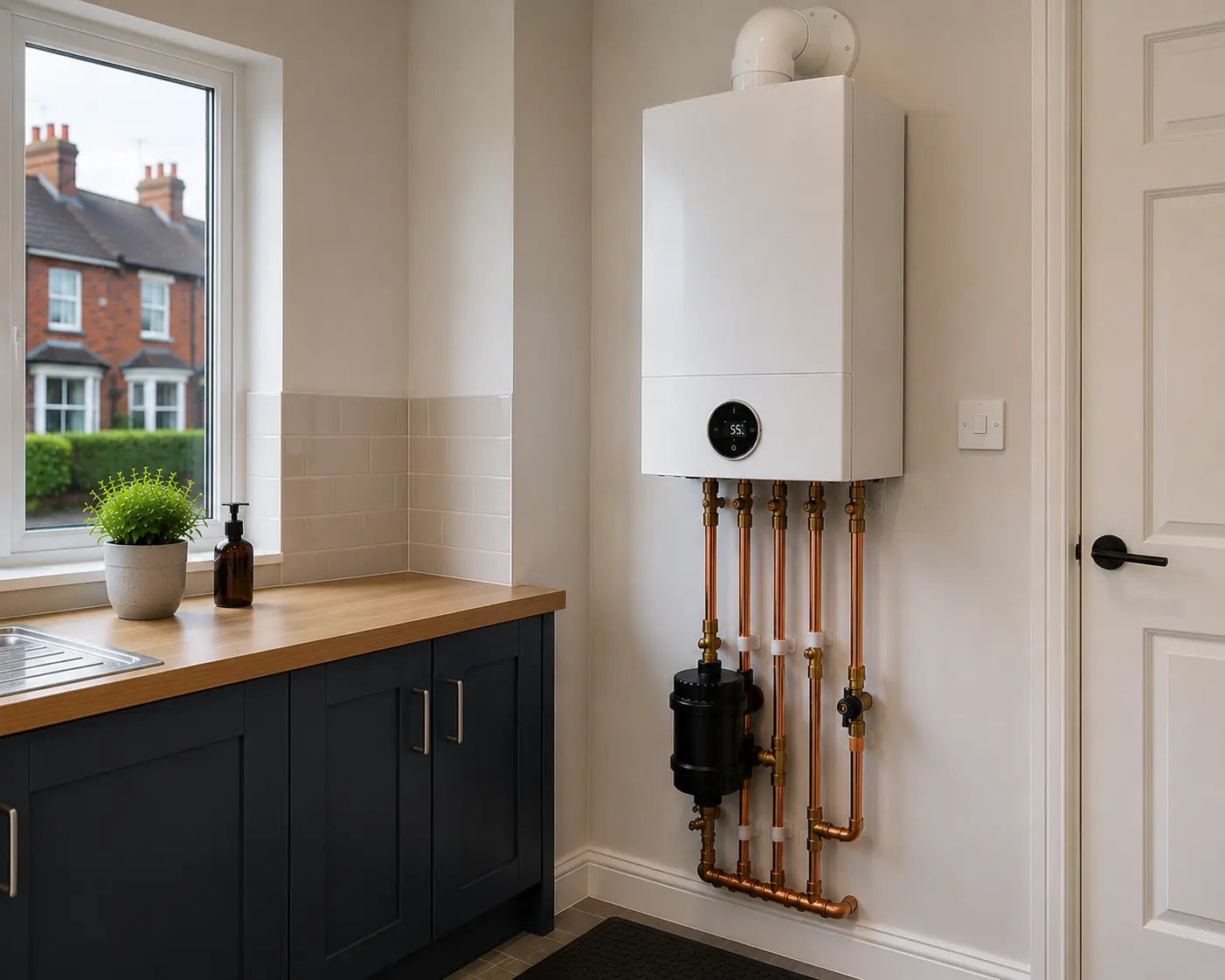
The flow pipe carries hot water away from the boiler out to your radiators or hot water cylinder, while the return pipe brings the cooled water back to the boiler to be reheated, forming a continuous circuit around your heating system. Engineers often check the temperature difference between flow and return as part of diagnosing system performance, since an unusually small or large difference can point to specific issues with circulation, pump performance, or system balancing.
Key takeaways
- The flow pipe carries heated water from the boiler out to radiators or the hot water cylinder; the return pipe brings the cooled water back to be reheated.
- Together, flow and return form a continuous loop, circulated by the boiler’s pump, that is the basic mechanism by which central heating distributes heat around a property.
- The temperature difference between flow and return, sometimes called delta T, is a useful diagnostic figure engineers check during servicing or fault-finding.
- An unusually small delta T can suggest water is moving through the system too quickly to give up its heat effectively; an unusually large one can suggest restricted flow.
- You do not need to understand the technical detail to have a well-functioning heating system, but it can help make sense of what an engineer is checking during a visit.
If you have ever heard a heating engineer mention flow and return temperatures during a service or repair visit and wondered what they meant, this guide explains the basic idea in plain terms.
The basic circuit
A central heating system works as a continuous loop: the boiler heats water, which then travels out through the flow pipe to your radiators (or hot water cylinder, on a system with one), where it gives up some of its heat before travelling back to the boiler through the return pipe, cooled, to be reheated and sent out again. This circuit is driven by the pump, typically built into the boiler on modern systems, which keeps the water moving continuously whenever the heating is calling for heat.
Why the temperature difference matters
The difference between the flow temperature (water leaving the boiler) and the return temperature (water coming back) is a genuinely useful figure for an engineer assessing system performance, sometimes referred to as delta T. Under normal, healthy operation, there should be a reasonable, expected temperature drop as the water passes through radiators and gives up heat to the room. If the difference is unusually small, it can suggest water is circulating too quickly through the system, not giving up enough heat as it passes through radiators, sometimes linked to pump speed settings or a system that is not properly balanced. If the difference is unusually large, it can suggest restricted flow somewhere in the system, sometimes linked to issues such as radiators needing power flushing or other circulation problems elsewhere in the system.
Why this comes up during servicing
Checking flow and return temperatures is a standard, useful diagnostic step during a boiler service or when investigating a heating performance complaint, since it gives an engineer an objective, measurable indicator of how well the system is actually circulating and distributing heat, beyond what can be judged simply by how warm radiators feel to the touch. It is one of several checks that together build a picture of overall system health, alongside pressure, general appliance condition, and visual inspection.
You do not need to understand the technical detail yourself
None of this is something a homeowner needs to actively monitor or understand in detail; it is simply useful background for making sense of what an engineer might mention during a visit, or for understanding why they might recommend an additional step like power flushing or a pump speed adjustment based on what these readings show. If your radiators are heating unevenly or your system is not performing as expected, an engineer checking flow and return figures as part of diagnosing the cause is a normal, sensible part of the process.
Book with Gasmaster
Radiators heating unevenly or want your system properly assessed? Gasmaster Plumbing & Heating covers Stoke-on-Trent, Newcastle-under-Lyme and Stafford for heating diagnostics and servicing. Get in touch through our central heating page.
Frequently asked questions
What is a normal flow and return temperature difference?
There is a generally expected range for a well-functioning system, though the specific figures depend on your system’s design; an engineer assessing your system directly can tell you whether your readings look normal.
Why would an engineer check my flow and return temperatures?
It is a useful, objective way to assess how well your heating system is circulating and distributing heat, particularly when investigating uneven heating or general performance complaints.
Does a small temperature difference mean my boiler is broken?
Not necessarily broken, but it can point towards an issue such as water circulating too quickly, pump speed settings, or a system needing better balancing, worth having assessed by an engineer.
Can I check flow and return temperatures myself?
It generally requires the right equipment and knowledge to interpret correctly, so this is best left to a qualified engineer as part of a proper system assessment.
Is this the same as the room thermostat temperature?
No, flow and return refer specifically to the boiler’s water temperature at the pipe level, distinct from the room air temperature your thermostat measures and responds to.
Sources
- CIBSE domestic heating system guidance
- Energy Saving Trust (energysavingtrust.org.uk)
- Manufacturer published boiler commissioning guidance
Related services

Abdul runs Gasmaster Plumbing & Heating and has worked on boilers, heating and gas appliances across Stoke-on-Trent since 2005. He is Gas Safe registered (reg. 220932), and these articles come from his day to day work in homes and businesses across Staffordshire, Cheshire and Derbyshire.