On this page
- What is the difference between a combi, system and regular boiler?
- How do the three types compare side by side?
- When is a combi boiler the right choice?
- When does a system boiler make more sense?
- Is a regular boiler ever still the best option?
- What is involved in switching boiler type?
- How does boiler type affect the cost?
- Getting the right boiler type for your Stoke-on-Trent home
- Frequently asked questions
Quick answer
A combi heats hot water on demand from the mains and suits most homes with one bathroom. A system boiler stores hot water in a cylinder and suits homes with two or more bathrooms. A regular boiler uses loft tanks and a vented cylinder and suits older homes with weak mains pressure or pipework not built for pressure.
Key takeaways
- Combis suit smaller homes where one hot tap or shower runs at a time.
- System boilers with a cylinder handle several showers at once far better.
- Regular boilers still make sense where mains pressure is weak or pipework is old.
- Your incoming mains flow rate matters as much as the boiler's kW rating.
- Changing boiler type costs more than a like-for-like swap because of pipework changes.
When a boiler needs replacing, most people assume they should fit the same type again, or that a combi is automatically the modern answer. Neither is always right. The best choice depends on how many bathrooms you have, how many people want hot water at the same time, and what your incoming water supply can actually deliver.
What is the difference between a combi, system and regular boiler?
The difference is where your hot water comes from. A combi heats mains water instantly as you open a tap, with no tank. A system boiler heats water stored in a cylinder, usually at mains pressure. A regular boiler also heats a cylinder, but relies on cold water tanks in the loft to feed it.
All three heat your radiators in much the same way. The differences show up at the taps and showers, in the space the system takes up, and in what happens when two people want a shower at once.
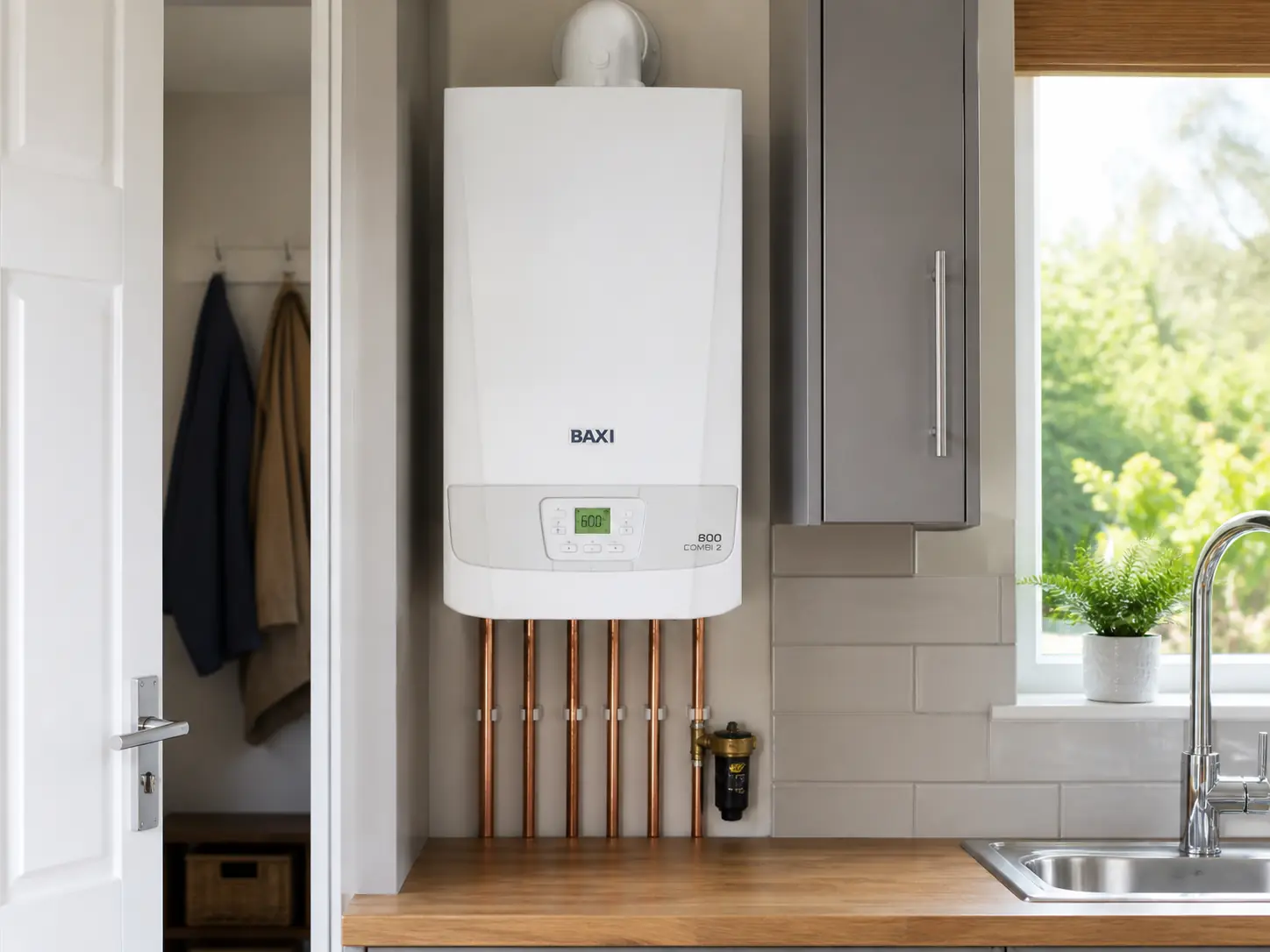
- Combi (combination) boiler: one wall-hung unit, no cylinder, no loft tanks. Hot water is made on demand.
- System boiler: the pump and expansion vessel are built in, the heating is sealed and pressurised, and hot water is stored in a cylinder, usually an unvented one.
- Regular boiler (also called conventional, heat-only or open-vent): a cold water storage tank and a small feed and expansion tank in the loft, plus a vented hot water cylinder, usually in the airing cupboard.
How do the three types compare side by side?
The quickest way to see which fits your home is to compare them on the things that actually affect daily life: space, hot water demand, whether you need a cylinder and how much the system depends on your mains water pressure.
| Factor | Combi | System | Regular |
|---|---|---|---|
| Space needed | Boiler only | Boiler plus cylinder | Boiler, cylinder and loft tanks |
| Hot water demand | One outlet at a time works best | Several outlets at once | Several outlets, at lower pressure |
| Hot water cylinder | No | Yes, usually unvented | Yes, vented |
| Reliance on mains pressure | High | High for an unvented cylinder | Low, fed by gravity |
| Typical home | Flats, terraces, 1-2 bed and many 3-bed semis | Larger family homes with 2+ bathrooms | Older homes, weak mains, existing tank systems |
When is a combi boiler the right choice?
A combi is usually right for homes with one bathroom and a household that rarely needs two hot outlets at the same time. It frees up the airing cupboard and loft, has fewer parts to go wrong outside the boiler itself, and you never run out of stored hot water because none is stored.
The catch is flow. A combi can only heat the water that comes through your main. If your incoming supply is weak, even a large combi will give a disappointing shower. Before recommending one, a good engineer measures the flow rate at the kitchen cold tap rather than guessing from the size of the house. Our guide to combi boiler kW sizes explains why a bigger boiler cannot fix a weak supply.
Hard water is worth knowing about too. Stoke-on-Trent water is hard, and limescale builds up in a combi's plate heat exchanger over time, which is one reason hot water problems on combis are common locally. A scale reducer on the cold feed helps.
When does a system boiler make more sense?
A system boiler makes more sense when you have two or more bathrooms, or a household where showers regularly overlap in the morning. A well-sized unvented cylinder can supply several outlets at good pressure because the stored water is already hot.
You do need room for the cylinder, and an unvented cylinder must be installed by someone qualified for unvented hot water work and should be checked annually alongside the boiler. It is also worth thinking ahead: most heat pumps need a hot water cylinder, as the Energy Saving Trust explains in its heating guidance, so a system with a cylinder already in place is easier to adapt later.
Is a regular boiler ever still the best option?
Yes. A regular boiler is often the sensible choice where the mains supply is too weak for a combi or unvented cylinder, or where older pipework might not cope with being pressurised. Replacing a regular boiler with another regular boiler is also usually the simplest and least disruptive job.
Many older properties across the Potteries still have loft tanks and a vented cylinder that work perfectly well. If yours does, and you are happy with the showers, there is no rule that says you must convert. Our piece on repairing or replacing a Potteries-era boiler covers the wider decision on older systems.
What is involved in switching boiler type?
Switching type means changing pipework as well as the boiler. Going from a regular boiler to a combi usually involves removing the loft tanks and cylinder, capping redundant pipes, rerouting the hot and cold supplies and pressurising a heating system that has only ever run open-vented.
Things to check before switching:
- Showers: a pumped power shower fed from a tank will not work with a combi and will need replacing. Electric showers are unaffected.
- Old pipework: pressurising an old open-vent system can reveal weak joints or tired radiator valves, so a proper clean and inspection first is wise.
- Immersion backup: a cylinder with an immersion heater gives you hot water if the boiler fails. A combi does not.
- Controls: in England, a new combi must be fitted with the extra energy-saving controls covered in our Boiler Plus rules guide.
How does boiler type affect the cost?
A like-for-like replacement is nearly always cheapest because the pipework, flue route and hot water arrangement stay the same. Changing type adds labour for pipework, removing tanks, making good and sometimes a new cylinder, which can make a noticeable difference to the final quote.
Running costs depend more on correct sizing, controls and how the system is set up than on the type itself. We go through the other factors in what affects the cost of a new boiler.
Getting the right boiler type for your Stoke-on-Trent home
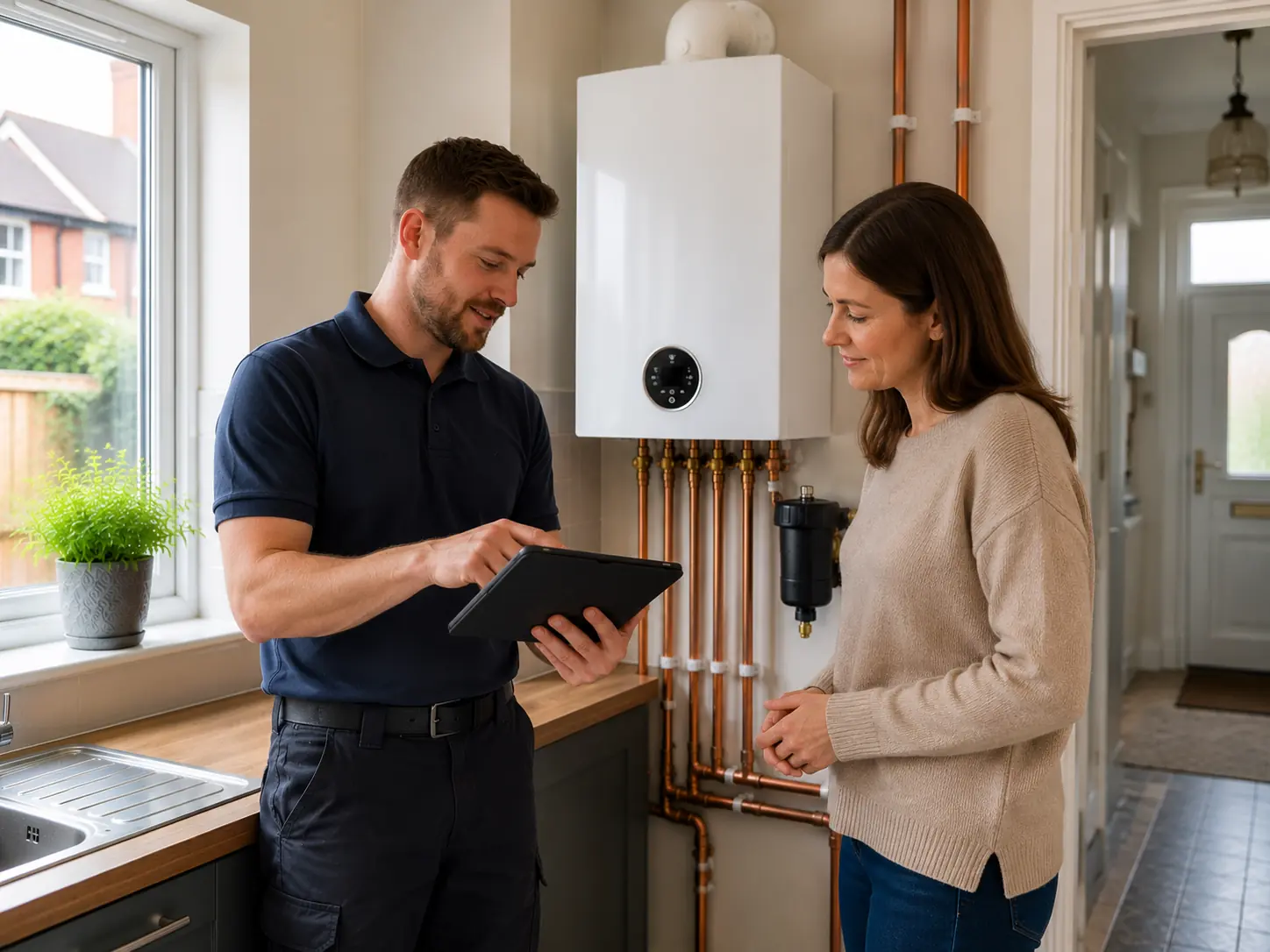
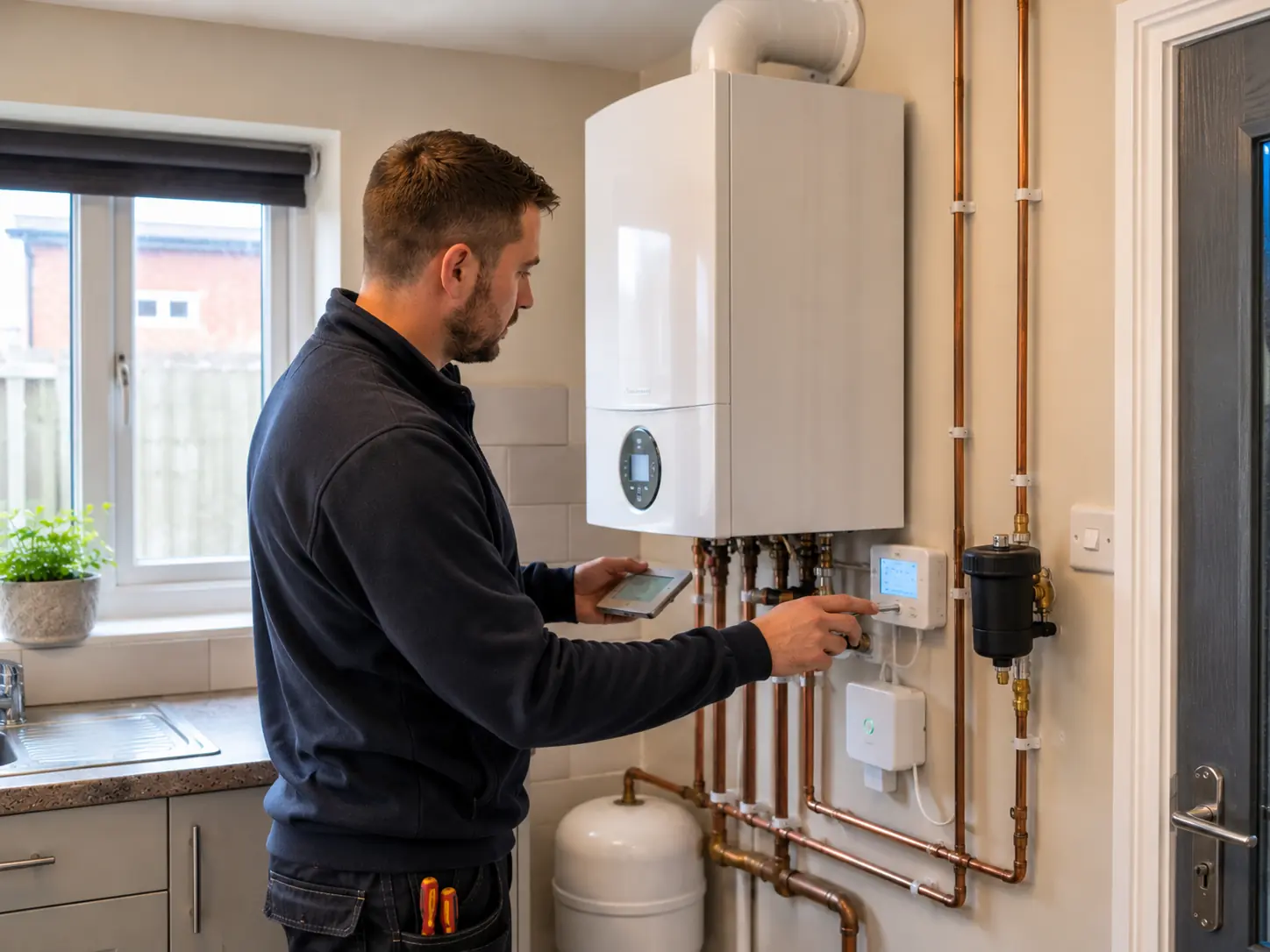
Early summer is a good time to plan a replacement, because the heating can be off for a day without anyone going cold. We offer free remote video surveys over WhatsApp, FaceTime or Zoom, so we can look at your current setup, check where the pipes run and talk through the options before quoting. Our Navien NCB300 combi packages come in 28kW, 37kW and 41kW with a 5 year warranty, a magnetic filter and a wireless room thermostat, and we also fit system and regular boilers where they suit the home better.
You can read more about new boiler supply and fitting, or call 07896 677083 to arrange a survey. We cover Stoke-on-Trent, Staffordshire, south Cheshire and Derbyshire, and look after the boilers we fit afterwards too, including boiler service in Stone and boiler service in Stafford.
Frequently asked questions
Can I get a combi boiler if I have two bathrooms?
You can, but it works best if the household rarely runs two showers at once and the incoming mains flow is strong. A larger combi helps a little, but if the supply is the limit, a system boiler with an unvented cylinder usually gives a more reliable result for two busy bathrooms.
Will switching to a combi lower my water pressure upstairs?
Often it improves it, because a combi delivers hot water at mains pressure instead of relying on gravity from a loft tank. The result depends on your incoming supply, which is why the flow rate should be measured at survey rather than assumed.
Do I lose anything by removing my hot water cylinder?
You lose stored hot water and any immersion heater backup, so if the boiler breaks down you have no hot water until it is fixed. You also lose the easy route to a future heat pump or solar hot water, which normally need a cylinder.
How long does it take to change from a regular boiler to a combi?
It usually takes longer than a straight swap because tanks, a cylinder and pipework come out and the system is converted to sealed. Your installer should give you a clear timescale at survey, as it depends on pipe routes and access.
Sources and further reading

Abdul runs Gasmaster Plumbing & Heating and has worked on boilers, heating and gas appliances across Stoke-on-Trent since 2005. He is Gas Safe registered (reg. 220932), and these articles come from his day to day work in homes and businesses across Staffordshire, Cheshire and Derbyshire.